The Empress of Asia: Bringing the Chinese to Canada

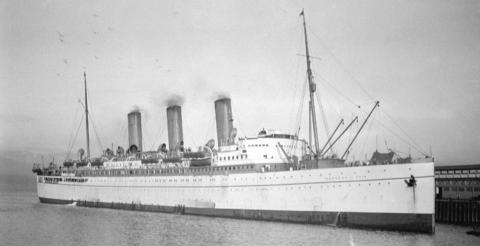
Photo by Robert E. Frost

While making the documentary about my family’s restaurant, I did quite a bit of research about my father’s past. I still have some unanswered questions. One is about the ship that brought him and many other Chinese to Canada, The Empress of Asia.

What was the voyage like? I can’t imagine how he felt when, in 1921, as a 13-year-old, he boarded the steamship alone in Hong Kong, heading for a country the Chinese called Gold Mountain. A steerage ticket aboard the Empress of Asia cost approximately $65, a substantial amount for many families at the time.  In the movie The Titanic, there are scenes of first-class passengers traveling in luxury while the steerage passengers drink and dance below deck. I wondered if my dad’s experience aboard ship was anything like those scenes. Was he free to roam about or restricted to certain areas of the ship, shunned by other passengers and crew because he was Chinese? One interesting fact I learned is that on the Empress of Asia’s trans-pacific voyages, the vast majority of the ship’s crew were Chinese.

One of the exciting things about doing research is finding a clue. I discovered a website I hadn’t seen before, Empress of Asia – A Canadian Pacific Steamship. This site, hosted by Nelson Oliver, has many interesting facts about the ship and it invites people to submit their own stories about the ship and/or the people who sailed on it.  A couple of days after I sent an email explaining that my father had sailed to Canada aboard the Asia,  I received a response from Dan Black, author of the book, Oceans of Fate: Peace and Peril Aboard the Steamship Empress of Asia, to be released on February 18, 2025. 

Dan kindly answered my questions about what traveling in steerage or Third Class would have been like in 1921. He sent the photo below from W. Kaye Lamb’s book Empress to the Orient (Vancouver Maritime Museum, 1991, p. 109). While it’s not about the Empress of Asia, it gives a good idea of what steerage, (also referred to as “Oriental Steerage”) would have been like.
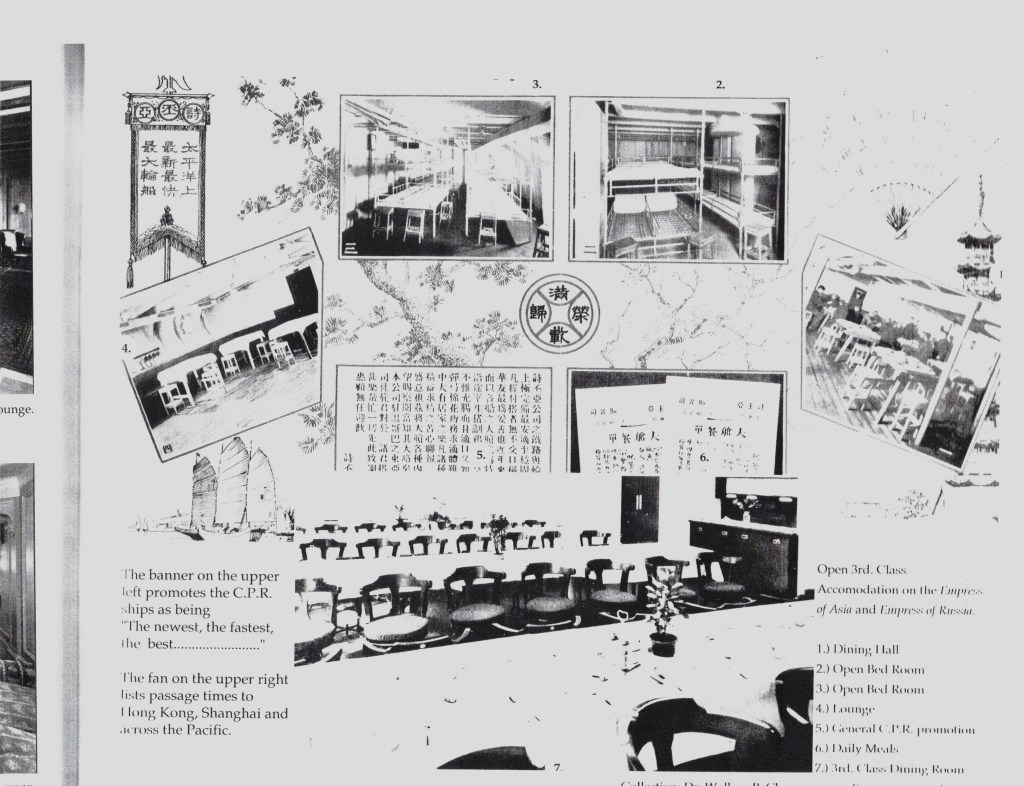
Dan explained:

“On page 194 of my book I describe a young woman descending into the cavernous ship to steerage. Both Nelson and I believe it is important to keep in mind that the Canadian Pacific Ocean Service (CPOS) depended heavily on the business from Chinese passengers travelling to and from North America. Accommodations in steerage on the Empress of Asia were nothing like the horrendous conditions of steerage that existed in the 19th century, especially on the Atlantic. On the Pacific during the time of the Empress of Asia steerage accommodation was comfortable, mostly as a result of the CP’s efforts to sell passage on its passenger ships. The accommodations were far from elegant, but Chinese steerage passengers could move about and there were designated locations where they could get fresh air. Chinese passengers could also travel in Second and Third Class. However, many could not afford it. And as previously noted, Steerage later became Third Class owing to the negative connotations associated with “steerage.”

The sleeping quarters in steerage were rather basic or common and far less private than Second or First Class. Women and families would have had small cabins known as Third Class Closed. To answer your other question, Nelson and I can tell you that races were segregated into separate quarters. This also occurred at quarantine stations after arrival on the west coast.”

The Empress of Asia was a marvel of engineering and design. Commissioned by the Canadian Pacific Railway Company, it was one of the company’s premier ships in the “Empress” line, renowned for their luxury and reliability. Built in 1913 by Fairfield Shipbuilding and Engineering Company in Scotland, it served as a vital link between continents, carrying passengers, cargo, and even soldiers across the oceans.

Dan’s book, Oceans of Fate: Peace and Peril Aboard the Steamship Empress of Asia, will be available for purchase on  February 18, 2025. 

The Lee’s Garden Project: Recipe for Chow Mein and Fried Rice

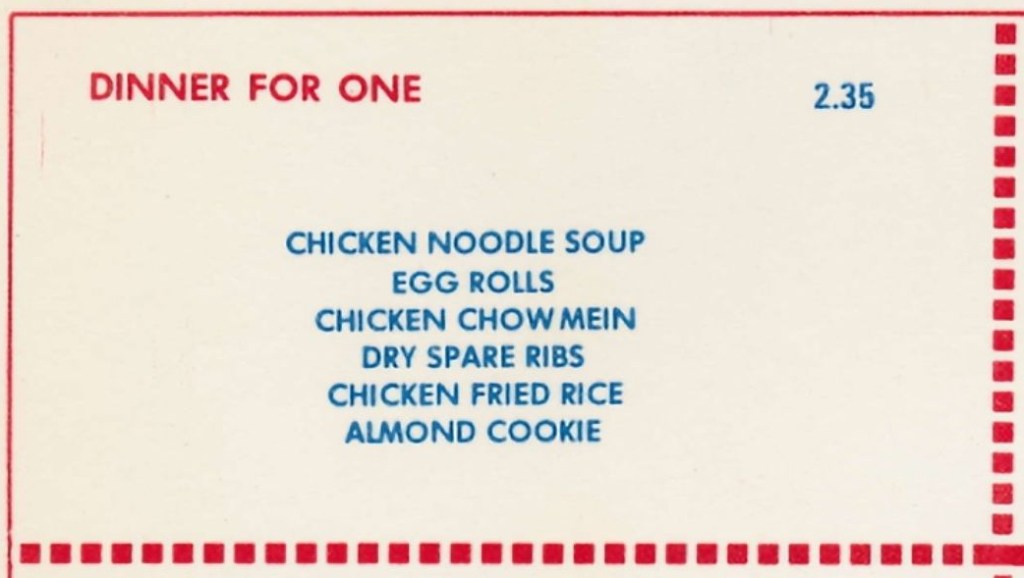
A couple of weeks ago, a friend and I recreated one of the most popular menu items from my family’s restaurant. Back in the late 1960s and early 1970s, one could order Dinner #1 for $2.35. Since both of our fathers worked in Chinese-Canadian restaurants, we found ourselves reminiscing about the food they served and our favorite dishes. So, we decided it would be a fun project to recreate some of the more popular menu items and our personal favorites from the Lee’s Garden menu.

From top to bottom: Dry Garlic Spare Ribs, Chicken Fried Rice and BBQ Pork Chow Mein with Bok Choy

The recipes are not from the restaurant. They are from my friend’s personal collection of recipes he has created called “Son of a Short Order Cook.”  

The recipe for Dry Spare Ribs has been on my blog for several years and is the only original recipe I have from the restaurant.

Have fun with the recipes. Don’t worry if you’re missing something and don’t be afraid to substitute something for whatever you have in the fridge.

CHICKEN CHOW MEIN

Ingredients

  • 200 gm Chow Mein egg noodles
  • 200 -250 gm skinless chicken breast, sliced (can substitute with beef)
  • 2 or 3 stalks green onions, white part finely chopped, green part chopped in ½ inches pieces
  • 2 garlic cloves, minced
  • 1 tsp fresh ginger, julienned
  • 4 junior Chinese bok choys, washed and the stalks separated (can add/substitute with bean sprouts or other greens – snow peas, green peppers, broccoli, Chinese cabbage)
  • ½ tsp white pepper
  • ½ tsp white sugar
  • ½ tsp baking soda
  • ½ tsp cornstarch
  • 2 tbsp Chinese cooking wine
  • 3 tbsp light soy sauce
  • 1 tbsp oyster sauce
  • 4 tbsp water
  • Cooking oil – sunflower, canola, or any oils with high smoking point

Instructions

Egg noodles from store could be packaged tightly so after opening, loosen them up and place in them in pot of boiling water for approximately one minute. Then take the noodles out and spread them on a baking sheet to dry out. Turn noodles over on the sheet after a while if necessary.

Combine chicken marinade ingredients in a bowl – 1 tbsp light soy sauce, 1 tbsp Chinese cooking wine, ½ tsp baking soda, ½ tsp white pepper. Mix well and stir in the chicken slices. Let marinated chicken sit for 15 to 30 minutes before cooking.

In a separate bowl mix the stir fry sauce ingredients – 2 tbsp light soy sauce, 1 tbsp oyster sauce, 1 tbsp Chinese cooking wine, 4 tbsp water, ½ tsp corn starch, ½ tsp sugar.

Heat cooking oil in a wok, approximately 1 to 2 tbsp or enough to freely coat the entire surface, on medium to high setting. When oil is hot, but not yet smoking, toss in the air-dried noodles in portions at a time to avoid clumping. Stir the noodles around until they turn color but not burnt. Remove noodles and place them in a separate greased uncovered frying pan over low heat, or on a baking sheet in the oven, to keep warm. Check once in a while to ensure they are not burning.

In the same wok, heat another tbsp of cooking oil and toss in the garlic, ginger, and the white part of the green onions. Stir the ingredients on high heat for approximately half minute, then add in the marinated chicken. Stir fry until chicken is browned on both sides. Add the bok choy to the wok and continue to stir fry for another minute or more until contents are cooked. If using other green vegetables such as snow peas or green peppers which take longer to cook, toss them in shortly after the chicken is added so that they all get fully cooked at the same time. Remove ingredients from wok and set aside temporarily in a bowl.

In the same wok pour in the stir fry sauce mixture and turn the heat down slightly towards medium. When mixture begins to bubble, toss the chicken and bok choy back in and when the sauce bubbles again toss in the noodles and the green part of the green onions. Give the ingredients a good stir so the noodles are coated with the sauce. Turn off the heat, put a lid on the wok and let it sit for 5 minutes before serving.

Sprinkle more soy sauce to taste if necessary. Dribble in some water and give it a stir if more moisture is preferred.

NOTE: To reheat leftover chow mein, add 1/2 cup of water, stir, and drain excess water. Then reheat in microwave.  This will help it from becoming too dry.

PLAIN FRIED RICE

Ingredients

  • 4 cups leftover cooked and chilled long grain rice
  • 1 garlic clove, minced
  • 2 stalks green onion, finely chopped
  • 1 large egg, scrambled
  • 1 tbsp light soy sauce, or more if preferred
  • Cooking oil – sunflower, canola, or any oils with high smoking point

Instructions

Heat cooking oil in wok over medium to high heat. Toss in garlic and stir for half a minute or before it starts to burn.

Add the green onions, then the rice. Stir the contents in the wok for a minute. Add the scrambled egg spreading it over the rice mixture and continue stirring the egg into the rice. Add soy sauce and toss rice until egg and soy sauce is well blended in.

Turn off heat, cover wok with a lid and let it sit for 5 minutes before serving.

Options are to add at the end other ingredients cooked separately – chopped chicken pieces, BBQ pork, prawns, peas, corn niblets.

Celebrating the 10th Anniversary with a New Book Cover and Title

Here it is! The new title and cover design for my young adult book which was previously published under the title “Guitar Hero.”

Published in 2013, I thought it was time to give it a new look for the 10th anniversary.

I want to thank James Bourque for the photography and Robin Patterson for the graphic design. I couldn’t have done this without them.

It’s available on Amazon now.

The First Chinese Policeman in Canada

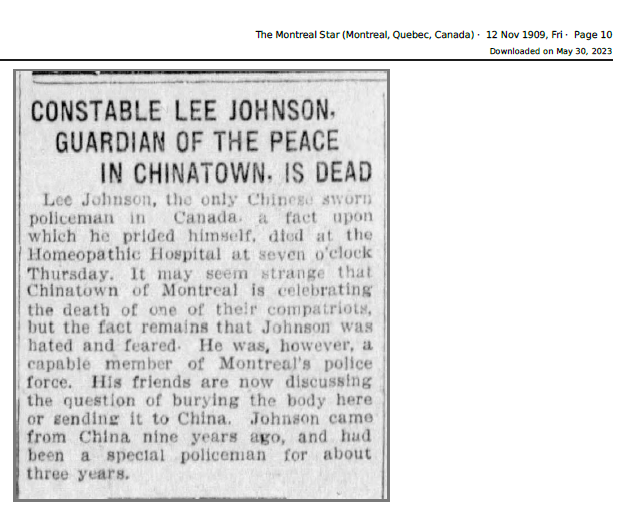
The first Chinese man to become a policeman in Canada was Constable Lee Johnson. He was sworn in on December 28, 1906.

Lee who had been a British subject for seven years, described himself as a commercial traveler. He was assigned to pay particular attention to Montreal’s Chinatown as he was familiar with all the Chinese gamblers and the men who ran the opium dens. A British subject for seven years, he spoke Chinese, French and English. He carried a revolver, a baton up his sleeve and a badge to display his authority. His exploits were reported in The Gazette and The Montreal Star.

Constable Lee Johnson died of typhoid fever on November 11, 1909.

This fact was discovered by Robert Wilkins, who helped me with research during the production of my documentary.  If you’re interested in learning about life in Montreal during the Edwardian era, take a look at Robert Wilkin’s books: Grandad’s Montreal 1901, Montreal 1909, and Montreal Recorder’s Court, 1906. You can find them at Paragraph Books and Argo Bookshop.

Commemoration of the 100th Anniversary of the Chinese Exclusion Act

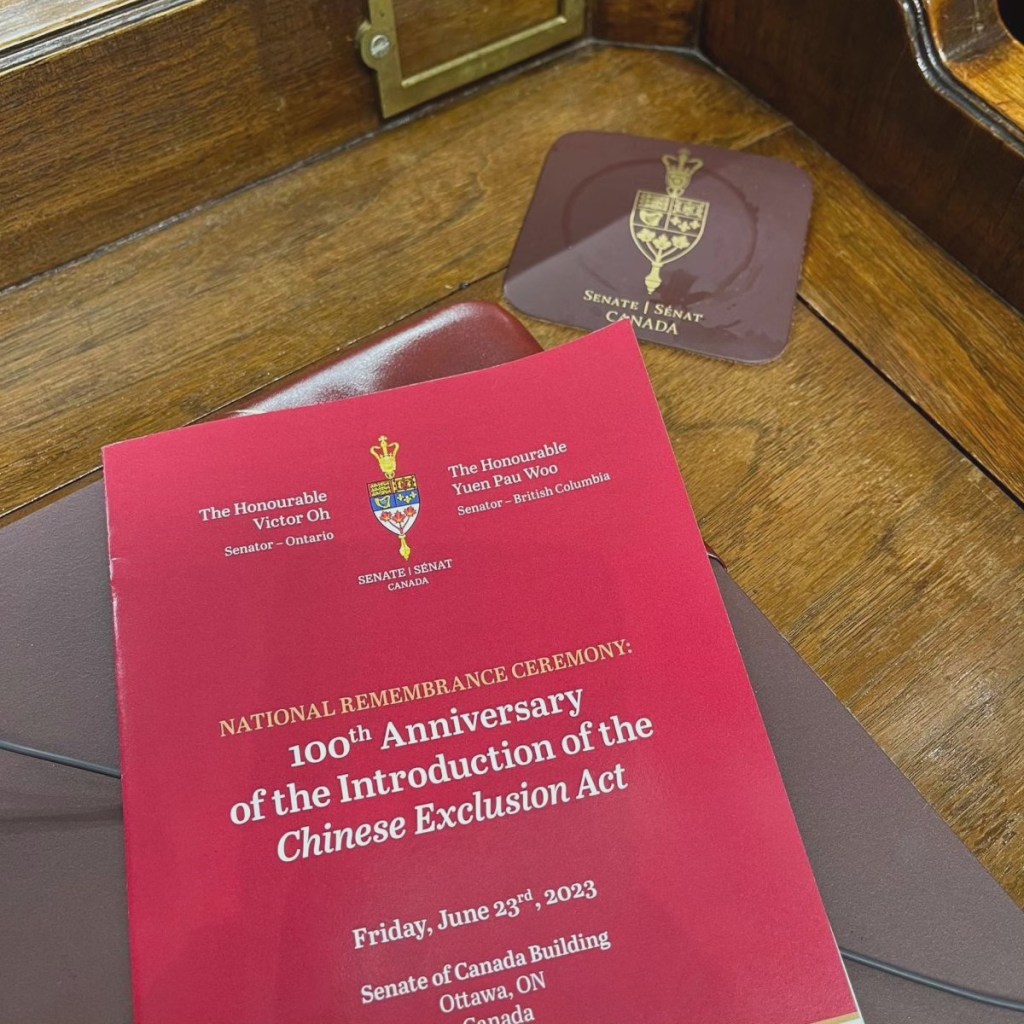
It was going to be a historical moment and the place where it was going to happen was significant. The place is a former train station that was a part of the railway network that Chinese labourers built across Canada. Currently the temporary home of the Senate of Canada, it was an appropriate venue to hold the National Remembrance Ceremony for the 100th Anniversary of the Introduction of the Chinese Exclusion Act.

The Act was officially called the Chinese Immigration Act and was passed into law on July 1st, 1923. It prohibited the Chinese from entering Canada, with a few exceptions. The date coincided with Dominion Day, now known as Canada Day. For decades, the Chinese called it Humiliation Day. When I was a kid, I never understood why my father refused to celebrate Canada’s birthday. I was an adult when I finally discovered this was the reason why. That’s why I wanted to see this ceremony; to see how far Canada has come since it enacted that racist law. The ceremony was held in the Senate on June 23, 2023, a week before the actual July 1st date.

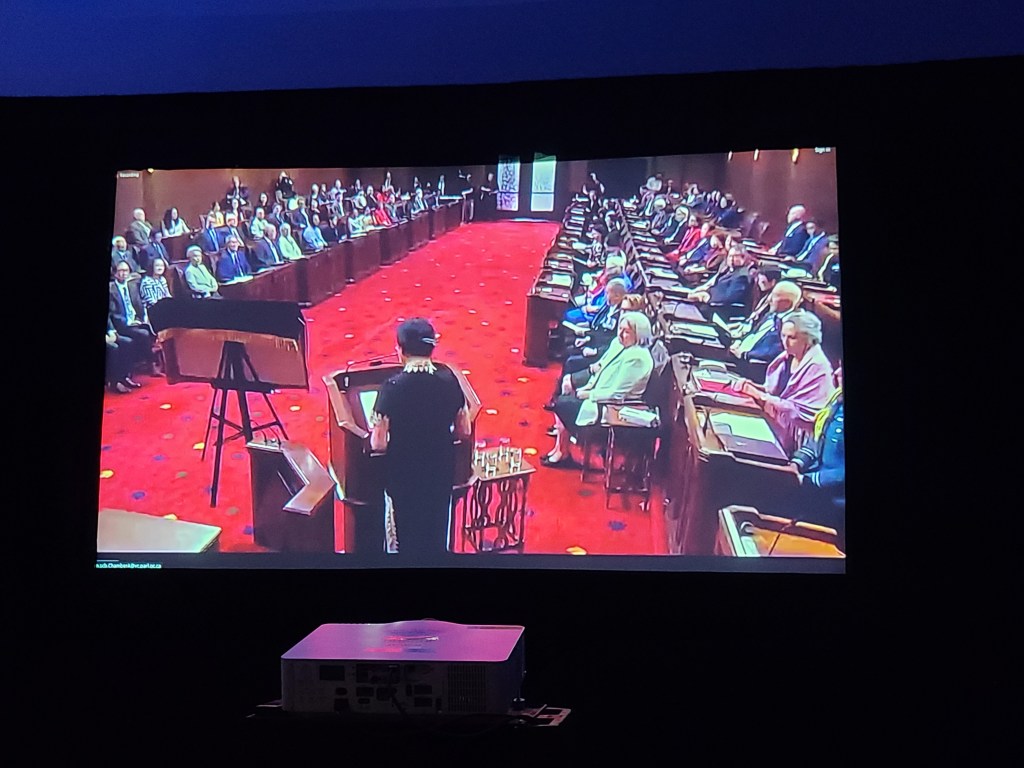
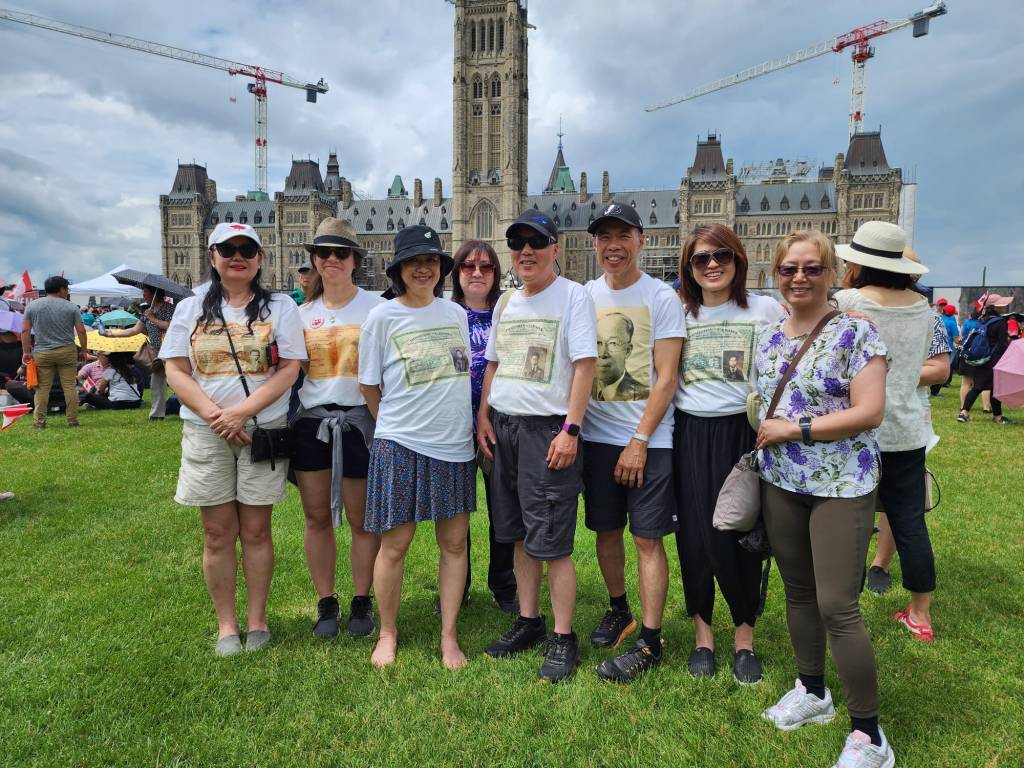
My family was directly affected by the Act that was passed by Prime Minister William Lyon Mackenzie King’s government in 1923. The Exclusion Act forced the Chinese to register with the government or risk fines or deportation or imprisonment. My father was 13 years old when he paid $500 to enter Canada in 1921, arriving just two years before the Act was passed. It separated him from his family in China for 24 years until the law was challenged and repealed in 1947. Since I didn’t get an invitation to the ceremony, I did the next best thing. I drove to Ottawa with other members of the JIA Foundation, a non-profit organization dedicated to ensuring Montreal’s Chinatown history and stories are celebrated and not forgotten. There, I joined the Ottawa Chinese community to watch a live stream of the event at the Ottawa Convention Centre.   

I wasn’t sure what to expect as I entered the ballroom in the Convention Centre that was set up to accommodate a few hundred people, but I enjoyed the three hour ceremony. After opening remarks and an Indigenous Blessing, a commemorative plaque was unveiled. It will be installed at the Chinese-Canadian Museum when it opens in Vancouver on June 30th.  

Of course, there were speeches, but they included touching personal stories from Chinese Senators and Ministers about how the Exclusion Act affected their own families.  And there was entertainment. Right on the floor of the Senate where the Act became law, were performances that reminded everyone of the damage and suffering it had caused. The Goh Ballet performed a dance called “Pathways to the Future”. A song that was written by an unknown composer 100 years ago in protest of the Act, entitled “Never forget July 1st” was performed by the National Remembrance Ceremony Choir, conducted by Chin Ki Yeung. The music was composed by Ashley Au. But it was Christopher Tse’s powerful spoken word performance that brought everyone in the senate to their feet.  Later on, when he arrived at the Convention Centre to meet the community, I asked him what it meant for him to be able to recite his poem in the Senate.

“It’s an honour for sure. To have that space in this building, in this instance that represents a government that was responsible directly for putting this legislation in place in the first place,” said Tse. “So it feels strangely symbolic, a bit of a full circle.”

Others I spoke to felt the same way. Anto Chan, host of the live-streaming event at the Ottawa Convention Centre said that seeing the past 100 years acknowledged was powerful. Melissa Tam, whose family was also affected by the Act, felt the ceremony was important as people are still dealing with issues.

So, this Saturday, July 1st, I will celebrate Canada Day as usual. I will also wonder how my father, if he were still alive, would have felt about the Remembrance Ceremony. Thanks to him and all the ancestors who fought for the right to stay in this country, their children, grandchildren and new immigrants enjoy all the benefits of being a Canadian.

However, we still find ourselves fighting anti-Chinese sentiments in spite of all the financial, economical, and artistic contributions the Chinese have made to this country. I think part of the fight is to tell people who we are and what we bring to the table. Sharing our culture, knowledge and friendship is ongoing, but we are more than just a menu at a Chinese-Canadian restaurant. We are a part of the beating heart that drives this country forward.

We are Canadian.

Asian Heritage Month – Celebrating a Book Anniversary

Guitar Hero by Day's Lee

Happy Asian Heritage Month!

As we celebrate Asian heritage in the month of May, and as the author of stories about the Chinese-Canadian community, I thought this would be the perfect time to make an announcement.

This year marks the 10th anniversary of the publication of my young adult novel Guitar Hero. Publishing has changed so much in the last 10 years. Back then, I took a daring leap into self-publishing when I released the book in November 2013.

The story about a Chinese teenage boy who dreams of becoming a rock and roll guitarist was well received by reviewers and readers. It was my first book-length work. I had published short stories, newspaper articles, and one children’s picture book up until then. I would get up an hour earlier than usual to write before I left for my office job so I could get at least a couple of hours of writing time for the day. With the help of a wonderful mentor, young adult author Lori Weber, I completed a decent first draft within a year. It was exciting and fun finding ways to get the main character in and out of trouble.

When I look back on what I’ve achieved since then, I don’t just see the work that was published. I also see the people I met and the things I learned. 

The people and authors I’ve met over the years have been so supportive. A few have become good friends. I received invitations to do school readings and book fairs. At gatherings, people introduced me to other guests as an author of children’s books. Their generosity and interest means a lot to me. Doing research for articles and books was an opportunity for me to learn about the Chinese culture. My parents, who spent 12 hours a day working at our restaurant, didn’t have the time or energy to teach me about Chinese traditions. As for myself, I was too involved with my own adventures growing up and going to school to think that perhaps there was something I should know.  It was my passion for writing that led me to connect with my own culture and to explore Chinese-Canadian history.

Being a writer can take you down some other interesting paths. Documentary film was the one I chose to travel on. As a self-published author, you wear many hats: writer, agent, web designer, editor, public relations, etc. So, when I decided to make a documentary about Chinese-Canadian restaurants, I took everything I learned from being a writer, the major lessons being that I know how to tell a story and that I can learn the necessary skills to get it done. That’s how I created Meet and Eat at Lee’s Garden, a documentary film about my family’s restaurant. It took six years from the day I started working on it to when it finally aired on the CBC network in November 2020.

So, I think it’s time to change the title Guitar Hero to give the story a new life. I love telling stories. I have ideas for short stories, books, articles, and films, but the one thing that my brain still cannot seem to do is come up with a title. It’s easier to write a 50,000 word novel!  I agonized over the title ten years ago. I wanted something that would reflect the story, but my brain could not come up with anything other than Guitar Hero.  But this time, I have to thank my friends, Virginia Modugno and Judie Troyansky, for their help in choosing a new title.

So stay tuned for the big reveal!

History of Montreal’s Chinese Community at McCord Museum

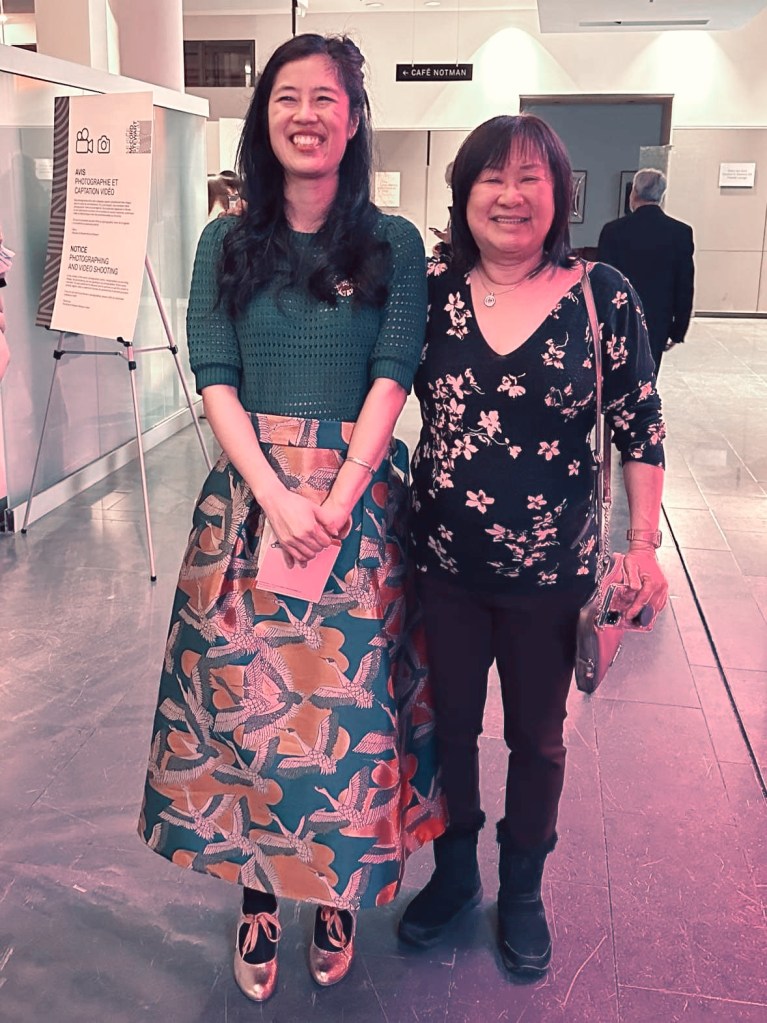
Last night, over 400 people showed up at the VIP event for a preview of Swallowing Mountains, Karen Tam’s exhibit at the McCord Stewart Museum. The wine flowed, speeches were given and then the guests eagerly made their way up to the 3rd floor. It was great to connect with people I hadn’t seen since pre-COVID.

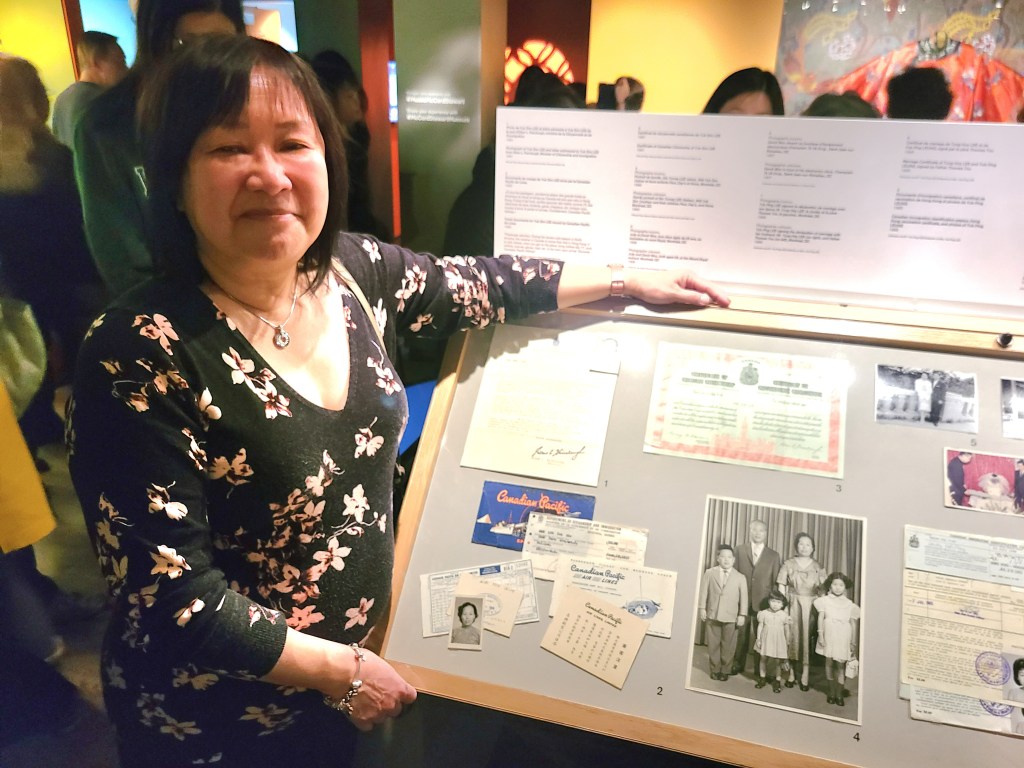
The exhibit is made up of items from the museum’s archives, Karen’s artwork, and photos from families in the Chinese community, including mine. Be sure to pop down to the museum before August 13th and have a look. It’s a great way to learn about Montreal’s Chinese community. https://www.musee-mccord-stewart.ca/en/exhibitions/swallowing-mountains-karen-tam/

Q & A with artist, Karen Tam

I’m very excited about an upcoming exhibit at the McCord Stewart Museum here in Montreal. Karen Tam, who you may remember from my documentary, is currently the museum’s artist-in-residence. Her solo show, Swallowing Mountains, will open to the public starting Friday, February 17th until August 13, 2023. The exhibit focuses on Montreal’s Chinese Community and I’m honored that a small part of my family’s history will be included in the exhibit.

Here is an introduction and a very short Q&A with Karen about the exhibit.

Swallowing Mountains

The year 2023 marks the 100th anniversary of the Chinese Exclusion Act of 1923, which banned virtually all forms of Chinese immigration to Canada. This legislation, along with the head tax levied only on Chinese immigrants and previous patterns of Chinese migration to Canada, resulted in a disproportionately low number of women in Chinese Canadian communities, creating what were known as ‘bachelor societies.’ During the dark period between 1923 and 1947, when the Act was repealed, and up to 1967, when Canadian immigration policy was liberalized, families were separated for decades.

This exhibition offers a counterpoint to the relative silence in public archives and historical narratives regarding Chinese women in Montreal’s Chinatown. An immersive installation, it honours the many women who have lived, worked, and contributed to the neighbourhood over the past 150 years and who, as a group, have been targeted by anti-Asian attacks during the COVID-19 pandemic. The work takes inspiration from objects and materials in the McCord Stewart Museum’s collection, ranging from historical photographs and family albums, to evening coats, restaurant menus, furniture, and Eaton’s ads.

In the 1970s, six acres of Chinatown were expropriated and razed to construct the Complexe Guy-Favreau and Montréal Convention Centre. This exhibition is a way to carve out and reclaim (albeit temporarily) a Chinese space. The alcoves in the gallery function as smaller installations that recall Chinese storefront displays or stage settings, incorporating my sculptures, shadow-puppets, drawings, and textile works. Swallowing Mountains also looks at the disconnect between the bygone popularity of chinoiserie and Japonisme among white women and the reality experienced by Chinese women in Canada since the late 19th century. By including Cantonese opera recordings, collected treasures and photographs lent by family members, elders and friends in the Chinatown community, the exhibition aims to open up conversations around collections and present a model for a future Montreal Chinese Archive.

1) How did you choose what to include in the exhibit?

At the beginning of my residency, I visited the museum’s reserves and collection (from ceramics to textiles to wallpaper samples to toys to furniture, etc.), and also spent a lot of time in the archives/documentation centre, looking through many photographs, family albums, prints, slides, documents, menus, and books. There were quite a number of objects and photographs that I knew had to be in the show. As I developed the project further and conceived of how I wanted the space to look like and be divided, this helped me in deciding what other objects (like the museum’s vases, tables), would work in the space, formally and conceptually. But it was especially difficult to decide which of the photographs from the family albums to include, as they were so fascinating and were taken from the perspectives of the Chinese individuals and families themselves and showed how they saw and presented themselves.

I knew that I wanted to involve the Chinese community in this exhibition and started contacting elders, family members, friends (such as yourself), residents in Chinatown, and through their invaluable help was able to connect with more people and community organizations in and outside Chinatown. They contributed to the project and lent their photographs and artefacts, which supplement items from my own collection, my artworks, and items from the McCord. As I mentioned above this is my proposal for an eventual building of a community archive that also could have a digitized component.

People were so generous and while I tried to include everything that they offered to lend, due to space constraints a number of photographs didn’t make into the physical exhibit (but I made sure to include at least one item per lender in the vitrines). The lenders graciously allowed the museum to digitize or they provided digitized versions of their images and these are viewable on an iPad/tablet next to the community photo vitrines. For many of the lenders, they felt that they never really saw the Chinese Canadian community, themselves, their families, histories and stories reflected in institutions such as the McCord Stewart Museum, and they wanted to support a project that highlights their experiences, especially an exhibition that focuses on Montreal Chinatown and Chinese women.

2) This exhibit, like your other installations, centers on the Chinese-Canadian experience. What does this one mean to you?

Much of my artwork comes out of my research in archives and museum collections. Certain pieces are inspired by specific historical or archival connections, and sometimes it is the materiality and imagery in the collections. At the McCord Stewart, I recognized that there was a gap or underrepresentation of the Montreal Chinese community in the museum’s collections and archives. Not to say there wasn’t any materials, but it made me think about how I could amplify and highlight stories, histories, contributions that did involve this community, especially the women. This exhibit is quite meaningful for me because it is in my hometown and provides an opportunity to do so. Through the exhibition, I hope that visitors will start thinking about the hidden stories and artifacts in their own family and community.

***

As part of the exhibit, on April 5th at 6pm, there will be a screening of Big Fight in Little Chinatown by local filmmaker, Karen Cho. It is a must-see film about how Chinatowns across Canada and in the U.S. are fighting for their survival. There will be a conversation in English between Karen Tam and Karen Cho after the screening. It is free but you must register on the museum’s website. Click on this link and scroll to the bottom of the page.

A First Time Filmmaker at the Yorkton Film Festival

“. . . and the nominees are . . .”

These are four little words that big dreams are made of and I actually got to live it in real life.

Like many film festivals the world over, the Yorkton Film Festival is virtual this year due to the pandemic. Kicking off the festival which is being held from May 27th to 30th was the award ceremony which was streamed live on opening night. My documentary Meet and Eat at Lee’s Garden was nominated in three categories: Research, Multicultural over 30 minutes, and Documentary History and Biography.  

This documentary is my first. Six years ago I had a story idea and I just knew that it had to be a documentary even though I had no experience making one. So just how did it get to be nominated for three of Yorkton Film Festival’s Golden Sheaf Awards?

I think my training and experience as an author had a lot to do with it. For the past two decades, I have been writing and publishing fiction and non-fiction. I’ve attended workshops and conferences on almost every aspect of the business of writing: how to craft stories, do research, how to pitch a story, how to write a synopsis, copyright and more. With a degree in journalism, I already knew how to interview people. Most importantly, I love documentaries. It’s been one of my favorite genres since I was a teenager. And just like the recommendation that anyone who wants to be a writer should read as much as they can, anyone who wants to make documentaries should watch as many as they can.

I figured that the skills I learned as an author would be transferable to film. After all, they are both about storytelling. So I approached filmmaking the same way I write. I found the heart of the story, and then set about to create a beginning, middle and an end, but not necessarily in that order.

It was a ton of work. Maybe even two tons. There were a lot of ups and downs, moaning about who would even watch it (I do the same with my writing “Who would want to read/publish it!?”), evenings spent researching digital libraries for photographs and video footage, checking facts, finding people to interview, transcribing interviews, agonizing over which scenes to keep or cut and figuring out how to change scenes and introduce new characters. I was producer, director and writer and I loved wearing all those hats.

It premiered on the CBC on November 14, 2020, and just like I do at a book launch, I nervously hoped people would like my baby. They did.

So that is how I found myself sitting at my dining table watching the Yorkton Film Festival award ceremony on my laptop anxiously waiting to hear whether my film would win in any of its categories.

It wasn’t a Zoom conference so winners would not give an acceptance speech. The presenters did a nice job of introducing and announcing the awards. To me, it felt like the Academy Awards. Each time they announced one of my categories, I held my breath. The poster flashed across the screen and I was tense with excitement. They announced the other nominees.

And then . . . the winner was someone else.

Of course I was disappointed. The end of that dream is winning the award, but it still feels really good just to have been nominated. This is so much more than I expected for my first documentary.

My congratulations to Captive produced by Antica Productions for winning the award for Research, The Artics produced by Midnight Light Media for winning Multicultural 30 Minutes and Over, and to Mr. Emancipation: The Walter Perry Story produced by The Walter Perry Freedom Foundation for winning Documentary History and Biography. I’m looking forward to watching these films.

It ain’t over folks. Meet and Eat at Lee’s Garden was selected by the Austin Asian American Film Festival which runs from June 4-20, 2021. It was rejected by a handful of other film festivals but I’m expecting a response from 17 others throughout the year.

I’ll keep you posted.

If you’re in Canada, you can watch Meet and Eat at Lee’s Garden on CBC through their GEM app.