
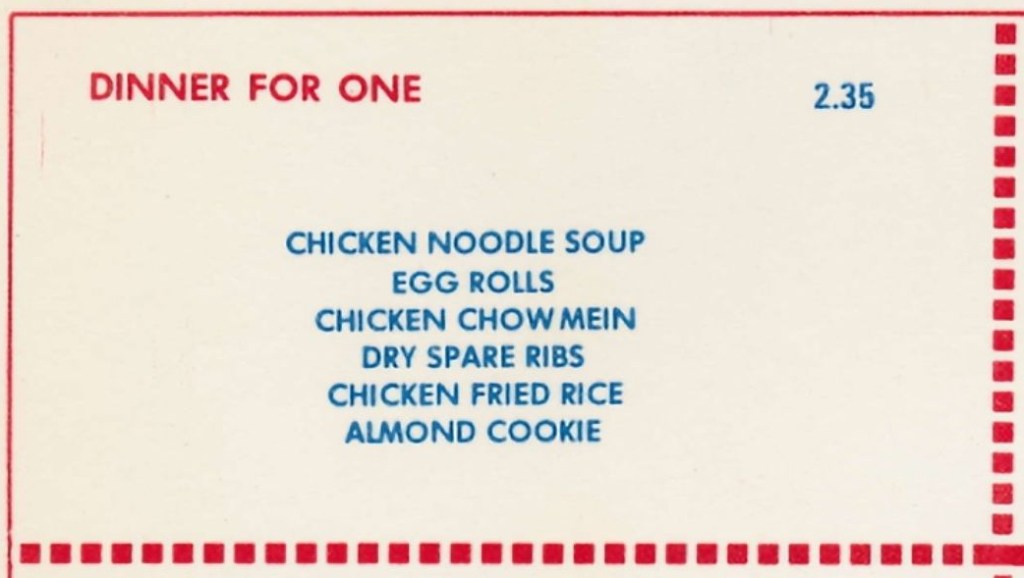
A couple of weeks ago, a friend and I recreated one of the most popular menu items from my family’s restaurant. Back in the late 1960s and early 1970s, one could order Dinner #1 for $2.35. Since both of our fathers worked in Chinese-Canadian restaurants, we found ourselves reminiscing about the food they served and our favorite dishes. So, we decided it would be a fun project to recreate some of the more popular menu items and our personal favorites from the Lee’s Garden menu.

The recipes are not from the restaurant. They are from my friend’s personal collection of recipes he has created called “Son of a Short Order Cook.”
The recipe for Dry Spare Ribs has been on my blog for several years and is the only original recipe I have from the restaurant.
Have fun with the recipes. Don’t worry if you’re missing something and don’t be afraid to substitute something for whatever you have in the fridge.
CHICKEN CHOW MEIN
Ingredients
- 200 gm Chow Mein egg noodles
- 200 -250 gm skinless chicken breast, sliced (can substitute with beef)
- 2 or 3 stalks green onions, white part finely chopped, green part chopped in ½ inches pieces
- 2 garlic cloves, minced
- 1 tsp fresh ginger, julienned
- 4 junior Chinese bok choys, washed and the stalks separated (can add/substitute with bean sprouts or other greens – snow peas, green peppers, broccoli, Chinese cabbage)
- ½ tsp white pepper
- ½ tsp white sugar
- ½ tsp baking soda
- ½ tsp cornstarch
- 2 tbsp Chinese cooking wine
- 3 tbsp light soy sauce
- 1 tbsp oyster sauce
- 4 tbsp water
- Cooking oil – sunflower, canola, or any oils with high smoking point
Instructions
Egg noodles from store could be packaged tightly so after opening, loosen them up and place in them in pot of boiling water for approximately one minute. Then take the noodles out and spread them on a baking sheet to dry out. Turn noodles over on the sheet after a while if necessary.
Combine chicken marinade ingredients in a bowl – 1 tbsp light soy sauce, 1 tbsp Chinese cooking wine, ½ tsp baking soda, ½ tsp white pepper. Mix well and stir in the chicken slices. Let marinated chicken sit for 15 to 30 minutes before cooking.
In a separate bowl mix the stir fry sauce ingredients – 2 tbsp light soy sauce, 1 tbsp oyster sauce, 1 tbsp Chinese cooking wine, 4 tbsp water, ½ tsp corn starch, ½ tsp sugar.
Heat cooking oil in a wok, approximately 1 to 2 tbsp or enough to freely coat the entire surface, on medium to high setting. When oil is hot, but not yet smoking, toss in the air-dried noodles in portions at a time to avoid clumping. Stir the noodles around until they turn color but not burnt. Remove noodles and place them in a separate greased uncovered frying pan over low heat, or on a baking sheet in the oven, to keep warm. Check once in a while to ensure they are not burning.
In the same wok, heat another tbsp of cooking oil and toss in the garlic, ginger, and the white part of the green onions. Stir the ingredients on high heat for approximately half minute, then add in the marinated chicken. Stir fry until chicken is browned on both sides. Add the bok choy to the wok and continue to stir fry for another minute or more until contents are cooked. If using other green vegetables such as snow peas or green peppers which take longer to cook, toss them in shortly after the chicken is added so that they all get fully cooked at the same time. Remove ingredients from wok and set aside temporarily in a bowl.
In the same wok pour in the stir fry sauce mixture and turn the heat down slightly towards medium. When mixture begins to bubble, toss the chicken and bok choy back in and when the sauce bubbles again toss in the noodles and the green part of the green onions. Give the ingredients a good stir so the noodles are coated with the sauce. Turn off the heat, put a lid on the wok and let it sit for 5 minutes before serving.
Sprinkle more soy sauce to taste if necessary. Dribble in some water and give it a stir if more moisture is preferred.
NOTE: To reheat leftover chow mein, add 1/2 cup of water, stir, and drain excess water. Then reheat in microwave. This will help it from becoming too dry.
PLAIN FRIED RICE
Ingredients
- 4 cups leftover cooked and chilled long grain rice
- 1 garlic clove, minced
- 2 stalks green onion, finely chopped
- 1 large egg, scrambled
- 1 tbsp light soy sauce, or more if preferred
- Cooking oil – sunflower, canola, or any oils with high smoking point
Instructions
Heat cooking oil in wok over medium to high heat. Toss in garlic and stir for half a minute or before it starts to burn.
Add the green onions, then the rice. Stir the contents in the wok for a minute. Add the scrambled egg spreading it over the rice mixture and continue stirring the egg into the rice. Add soy sauce and toss rice until egg and soy sauce is well blended in.
Turn off heat, cover wok with a lid and let it sit for 5 minutes before serving.
Options are to add at the end other ingredients cooked separately – chopped chicken pieces, BBQ pork, prawns, peas, corn niblets.

 Day's Lee