History of Montreal’s Chinese Community at McCord Museum

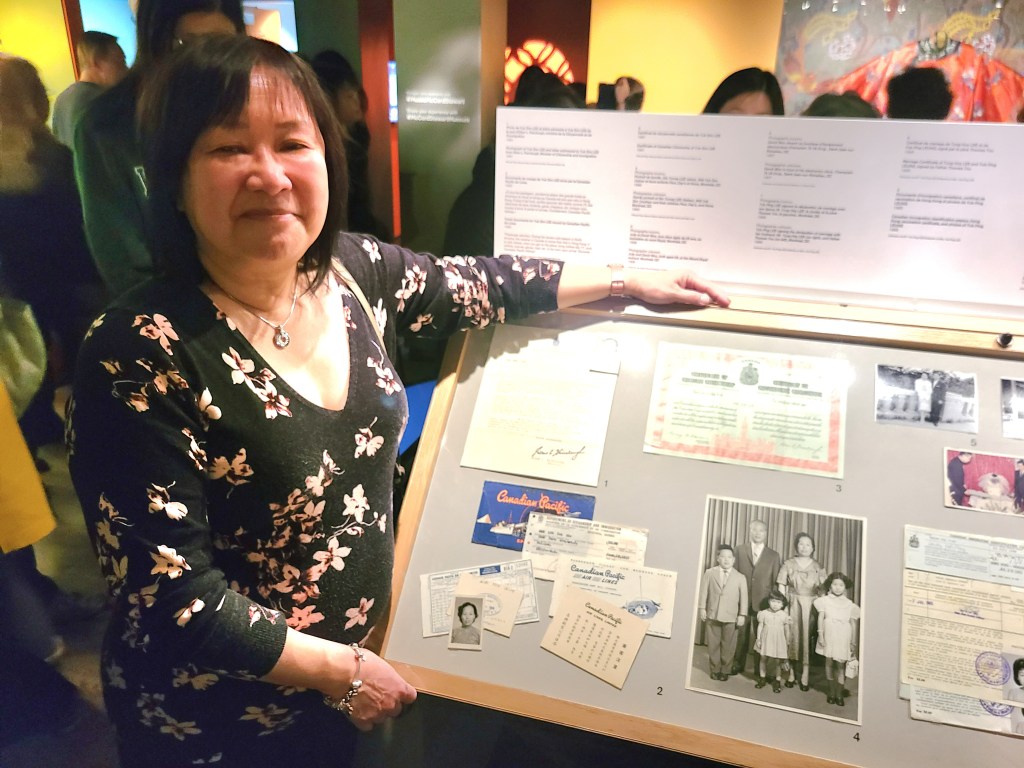
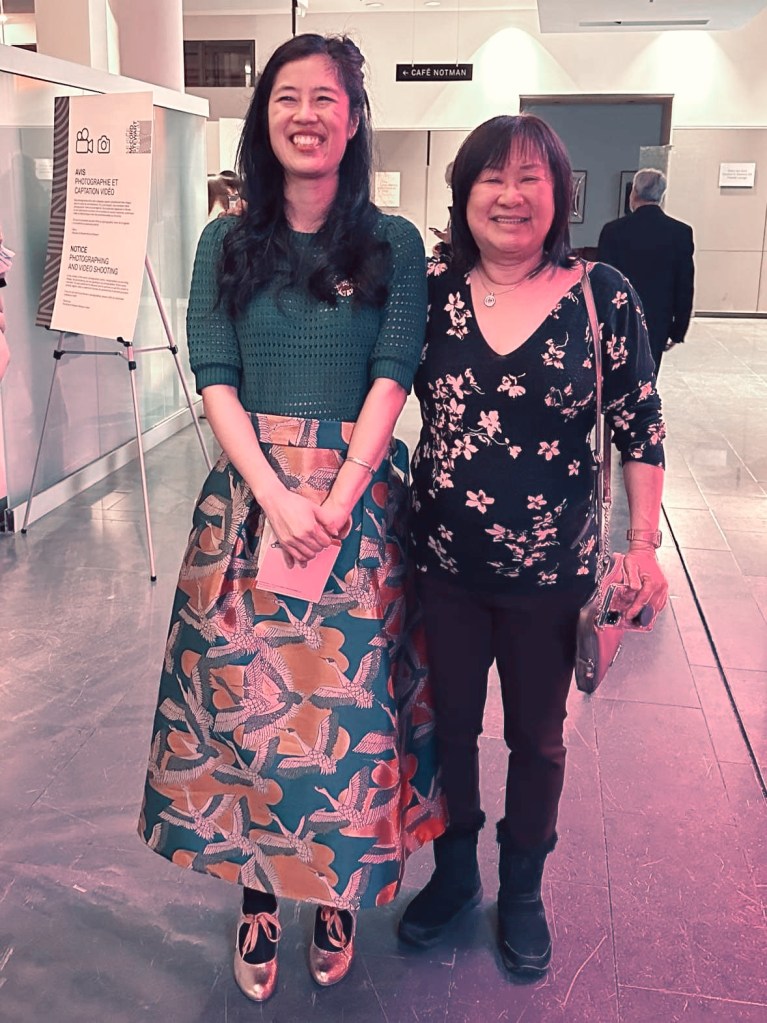
Last night, over 400 people showed up at the VIP event for a preview of Swallowing Mountains, Karen Tam’s exhibit at the McCord Stewart Museum. The wine flowed, speeches were given and then the guests eagerly made their way up to the 3rd floor. It was great to connect with people I hadn’t seen since pre-COVID.

The exhibit is made up of items from the museum’s archives, Karen’s artwork, and photos from families in the Chinese community, including mine. Be sure to pop down to the museum before August 13th and have a look. It’s a great way to learn about Montreal’s Chinese community. https://www.musee-mccord-stewart.ca/en/exhibitions/swallowing-mountains-karen-tam/

Q & A with artist, Karen Tam

I’m very excited about an upcoming exhibit at the McCord Stewart Museum here in Montreal. Karen Tam, who you may remember from my documentary, is currently the museum’s artist-in-residence. Her solo show, Swallowing Mountains, will open to the public starting Friday, February 17th until August 13, 2023. The exhibit focuses on Montreal’s Chinese Community and I’m honored that a small part of my family’s history will be included in the exhibit.

Here is an introduction and a very short Q&A with Karen about the exhibit.

Swallowing Mountains

The year 2023 marks the 100th anniversary of the Chinese Exclusion Act of 1923, which banned virtually all forms of Chinese immigration to Canada. This legislation, along with the head tax levied only on Chinese immigrants and previous patterns of Chinese migration to Canada, resulted in a disproportionately low number of women in Chinese Canadian communities, creating what were known as ‘bachelor societies.’ During the dark period between 1923 and 1947, when the Act was repealed, and up to 1967, when Canadian immigration policy was liberalized, families were separated for decades.

This exhibition offers a counterpoint to the relative silence in public archives and historical narratives regarding Chinese women in Montreal’s Chinatown. An immersive installation, it honours the many women who have lived, worked, and contributed to the neighbourhood over the past 150 years and who, as a group, have been targeted by anti-Asian attacks during the COVID-19 pandemic. The work takes inspiration from objects and materials in the McCord Stewart Museum’s collection, ranging from historical photographs and family albums, to evening coats, restaurant menus, furniture, and Eaton’s ads.

In the 1970s, six acres of Chinatown were expropriated and razed to construct the Complexe Guy-Favreau and Montréal Convention Centre. This exhibition is a way to carve out and reclaim (albeit temporarily) a Chinese space. The alcoves in the gallery function as smaller installations that recall Chinese storefront displays or stage settings, incorporating my sculptures, shadow-puppets, drawings, and textile works. Swallowing Mountains also looks at the disconnect between the bygone popularity of chinoiserie and Japonisme among white women and the reality experienced by Chinese women in Canada since the late 19th century. By including Cantonese opera recordings, collected treasures and photographs lent by family members, elders and friends in the Chinatown community, the exhibition aims to open up conversations around collections and present a model for a future Montreal Chinese Archive.

1) How did you choose what to include in the exhibit?

At the beginning of my residency, I visited the museum’s reserves and collection (from ceramics to textiles to wallpaper samples to toys to furniture, etc.), and also spent a lot of time in the archives/documentation centre, looking through many photographs, family albums, prints, slides, documents, menus, and books. There were quite a number of objects and photographs that I knew had to be in the show. As I developed the project further and conceived of how I wanted the space to look like and be divided, this helped me in deciding what other objects (like the museum’s vases, tables), would work in the space, formally and conceptually. But it was especially difficult to decide which of the photographs from the family albums to include, as they were so fascinating and were taken from the perspectives of the Chinese individuals and families themselves and showed how they saw and presented themselves.

I knew that I wanted to involve the Chinese community in this exhibition and started contacting elders, family members, friends (such as yourself), residents in Chinatown, and through their invaluable help was able to connect with more people and community organizations in and outside Chinatown. They contributed to the project and lent their photographs and artefacts, which supplement items from my own collection, my artworks, and items from the McCord. As I mentioned above this is my proposal for an eventual building of a community archive that also could have a digitized component.

People were so generous and while I tried to include everything that they offered to lend, due to space constraints a number of photographs didn’t make into the physical exhibit (but I made sure to include at least one item per lender in the vitrines). The lenders graciously allowed the museum to digitize or they provided digitized versions of their images and these are viewable on an iPad/tablet next to the community photo vitrines. For many of the lenders, they felt that they never really saw the Chinese Canadian community, themselves, their families, histories and stories reflected in institutions such as the McCord Stewart Museum, and they wanted to support a project that highlights their experiences, especially an exhibition that focuses on Montreal Chinatown and Chinese women.

2) This exhibit, like your other installations, centers on the Chinese-Canadian experience. What does this one mean to you?

Much of my artwork comes out of my research in archives and museum collections. Certain pieces are inspired by specific historical or archival connections, and sometimes it is the materiality and imagery in the collections. At the McCord Stewart, I recognized that there was a gap or underrepresentation of the Montreal Chinese community in the museum’s collections and archives. Not to say there wasn’t any materials, but it made me think about how I could amplify and highlight stories, histories, contributions that did involve this community, especially the women. This exhibit is quite meaningful for me because it is in my hometown and provides an opportunity to do so. Through the exhibition, I hope that visitors will start thinking about the hidden stories and artifacts in their own family and community.

***

As part of the exhibit, on April 5th at 6pm, there will be a screening of Big Fight in Little Chinatown by local filmmaker, Karen Cho. It is a must-see film about how Chinatowns across Canada and in the U.S. are fighting for their survival. There will be a conversation in English between Karen Tam and Karen Cho after the screening. It is free but you must register on the museum’s website. Click on this link and scroll to the bottom of the page.
A First Time Filmmaker at the Yorkton Film Festival

“. . . and the nominees are . . .”

These are four little words that big dreams are made of and I actually got to live it in real life.

Like many film festivals the world over, the Yorkton Film Festival is virtual this year due to the pandemic. Kicking off the festival which is being held from May 27th to 30th was the award ceremony which was streamed live on opening night. My documentary Meet and Eat at Lee’s Garden was nominated in three categories: Research, Multicultural over 30 minutes, and Documentary History and Biography.  

This documentary is my first. Six years ago I had a story idea and I just knew that it had to be a documentary even though I had no experience making one. So just how did it get to be nominated for three of Yorkton Film Festival’s Golden Sheaf Awards?

I think my training and experience as an author had a lot to do with it. For the past two decades, I have been writing and publishing fiction and non-fiction. I’ve attended workshops and conferences on almost every aspect of the business of writing: how to craft stories, do research, how to pitch a story, how to write a synopsis, copyright and more. With a degree in journalism, I already knew how to interview people. Most importantly, I love documentaries. It’s been one of my favorite genres since I was a teenager. And just like the recommendation that anyone who wants to be a writer should read as much as they can, anyone who wants to make documentaries should watch as many as they can.

I figured that the skills I learned as an author would be transferable to film. After all, they are both about storytelling. So I approached filmmaking the same way I write. I found the heart of the story, and then set about to create a beginning, middle and an end, but not necessarily in that order.

It was a ton of work. Maybe even two tons. There were a lot of ups and downs, moaning about who would even watch it (I do the same with my writing “Who would want to read/publish it!?”), evenings spent researching digital libraries for photographs and video footage, checking facts, finding people to interview, transcribing interviews, agonizing over which scenes to keep or cut and figuring out how to change scenes and introduce new characters. I was producer, director and writer and I loved wearing all those hats.

It premiered on the CBC on November 14, 2020, and just like I do at a book launch, I nervously hoped people would like my baby. They did.

So that is how I found myself sitting at my dining table watching the Yorkton Film Festival award ceremony on my laptop anxiously waiting to hear whether my film would win in any of its categories.

It wasn’t a Zoom conference so winners would not give an acceptance speech. The presenters did a nice job of introducing and announcing the awards. To me, it felt like the Academy Awards. Each time they announced one of my categories, I held my breath. The poster flashed across the screen and I was tense with excitement. They announced the other nominees.

And then . . . the winner was someone else.

Of course I was disappointed. The end of that dream is winning the award, but it still feels really good just to have been nominated. This is so much more than I expected for my first documentary.

My congratulations to Captive produced by Antica Productions for winning the award for Research, The Artics produced by Midnight Light Media for winning Multicultural 30 Minutes and Over, and to Mr. Emancipation: The Walter Perry Story produced by The Walter Perry Freedom Foundation for winning Documentary History and Biography. I’m looking forward to watching these films.

It ain’t over folks. Meet and Eat at Lee’s Garden was selected by the Austin Asian American Film Festival which runs from June 4-20, 2021. It was rejected by a handful of other film festivals but I’m expecting a response from 17 others throughout the year.

I’ll keep you posted.

If you’re in Canada, you can watch Meet and Eat at Lee’s Garden on CBC through their GEM app.

Following Your Dreams: An Interview with Blooming Boomers

Years ago when I first started writing, I would go to bookstores and conferences to listen to authors talk about their books. The most common question asked by the audience was: How did you do it? Now that I am a published author and have completed my first documentary, that’s a question that most people ask me. You can hear what I have to say about it on The Blooming Boomers, a podcast from Vancouver with hosts Anna and Mirella that focuses on topics for mature folks over 50 years of age. Click on the link below to listen as we discuss Creativity at a Mature Age.

https://www.buzzsprout.com/402718/6231220-s3-e4-creativity-at-a-mature-age

Writing Spaces

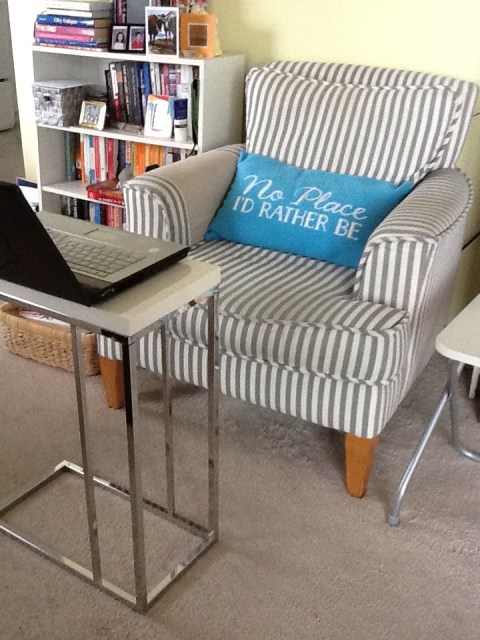
The time has come to say good-bye to one of my favorite writing spaces: my armchair. I’ve had it for 20 years. It started out as just a piece of living room furniture when I used to write at a desk chained to a desktop computer. However, once I got a laptop and wi-fi, I was free to sit and write anywhere in the house: the dining room table, the Continue reading

Paper Fortune Cookie Tutorial

Here’s a neat idea for a Chinese New Year party from the blog Feels Like Home, paper fortune cookies!

 * * *

You won’t believe how easy it is to make these paper fortune cookies. They’re inspired by the Silhouette machine template below, but you can make them almost as easily without a machine.

When I saw these paper fortune cookies in the Silhouette store, I had to make some.

Read more: http://www.feelslikehomeblog.com/2013/12/paper-fortune-cookie-tutorial/#ixzz3QjlufkXJ
Follow us: @TaraZiegmont on Twitter | FeelsLikeHome on Facebook


The Fitting Room by Cheryl Sim

Chinese Fever

Looking for some free things to do around Montreal? Head towards Chinatown and take a look at a couple of exhibits by local artists.

Cheryl Sim

Cheryl Sim

La Cabine d’Essayage (The Fitting Room) by Cheryl Sim is aptly located in a small corner of a shopping mall in Chinatown amid clothing and accessory boutiques.

Sim examines the cheongsam, which according to her, is a dress that has become an internationally recognized symbol of Chinese cultural identity. She asks Canadian-born Chinese women how they feel about the dress and if they have a desire to wear it. You get to listen to their answers through headphones and feel as if you’re a part of their conversation. Also part of the exhibit is a video-sculptural work that evokes the classic Chinese screen on which photos and videos showing the evolution of the cheongsam are displayed, and a transparent, plexi-glass fitting room which projects clips from Hollywood films onto the visitor’s body.

Continue reading

Digging for Chinese Treasure…in a Museum

Karen Tam

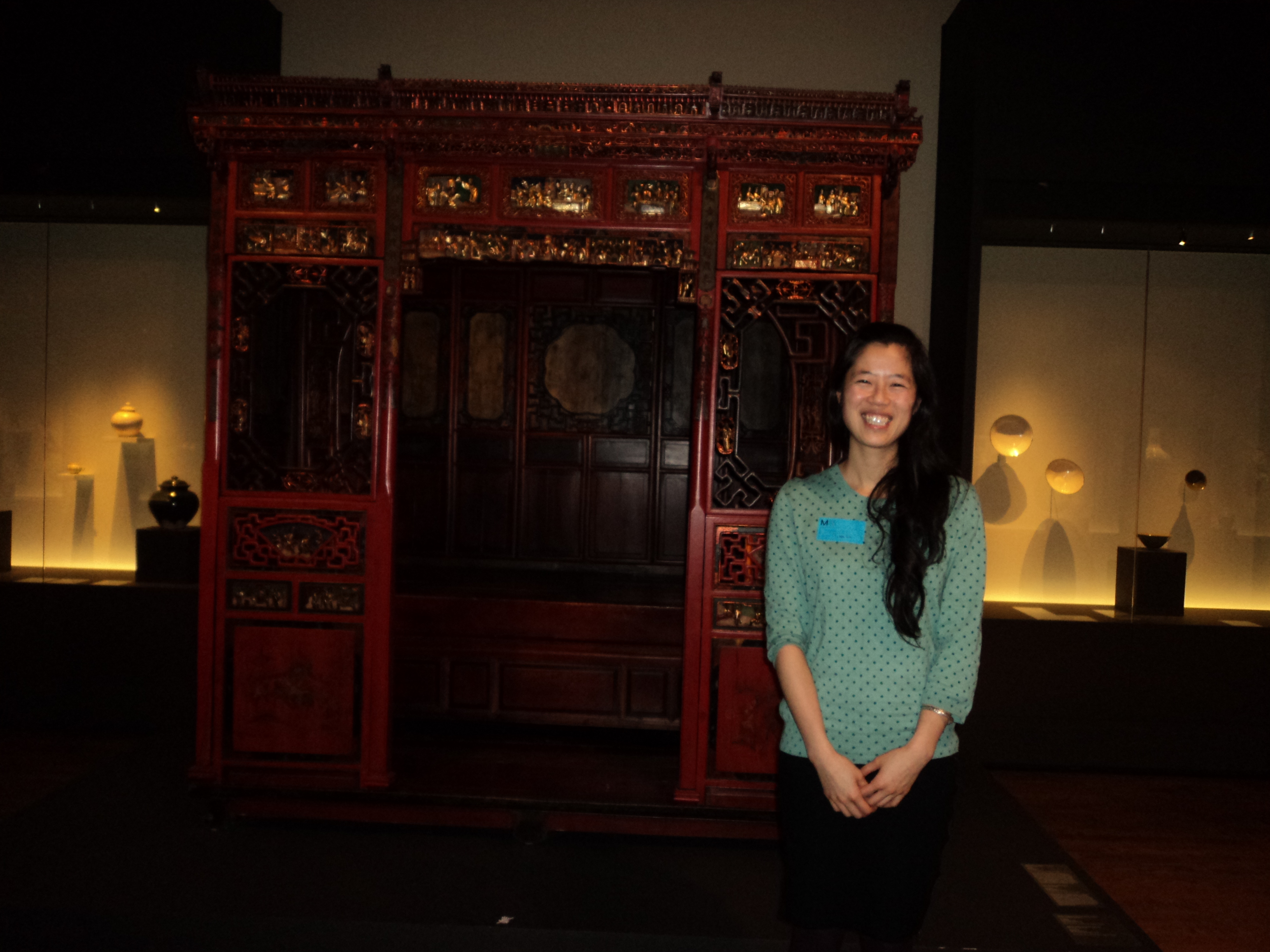
Karen Tam in front of Qing dynasty Alcove Bed at the Montreal Museum of Fine Arts

When my friend Karen Tam, told me earlier this year that she was the artist-in-residence at the Montreal Museum of Fine Arts, I asked her two questions:

1) Do the statues come to life like in the movie A Night at the Museum?
2) What was she doing there?

So maybe my imagination is fueled by movies including Indiana Jones and more recently, Monument Men, and maybe I was disappointed that the answer to my first question was “no,” but I found Karen’s project to be very intriguing.

I met her again on the last day of her residency, this time at the museum, to find out exactly what she was working on. She had spent six weeks exploring their archives and learning about the history of the museum’s collection of Chinese art and artefacts. It was late Friday morning, and we sat on a vinyl bench on the third floor where only a handful of people were perusing the display cases.

Many of the objects she examined came from antique dealers in New York, Boston and London, two of who obtained valuable artefacts because of major historical events. Goods belonging to Japanese-Americans who were interned during the Second World War wound up in the hands of Yamanaka Sadajirô and his company Yamanaka & Co which dealt in government confiscated goods. The other one was C.T. Loo.  Treasures that once belonged to the Chinese Imperial Family fell into his hands as they sold what they could in order to flee China before the fall of the Last Emperor and the Japanese invasion. Accused of being a thief and looter of China’s national treasures, Loo defended himself by saying he was actually saving the art by selling them to collectors.

It seems that the museum also played a small part in history. In the 1940s, the museum held three exhibits by Chinese artists of which one was to raise money for China’s Nationalist Party and another for China’s Communist Party. However, all three exhibits were held when Canada’s Chinese Exclusion Act (which banned Chinese immigrants from entering the country from 1923-1947 )was still in force. Canadian society, while appreciating the art and culture of the Far East, did not hold the same appreciation for the people who created it.

The museum’s Chinese collection holds many stories, but as Karen’s residency ends her interest does not. She is holding talks with the museum about the possibility of holding an exhibit based on her discoveries. In the meantime, her next installation will be at the Mendel Art Gallery in Saskatoon as part of the exhibition “Convoluted Beauty: In the Company of Emily Carr,” at the end of June. Her subject will be Lee Nam, a Chinese immigrant to British Columbia, who was a painter and a friend of Emily Carr. In collaboration with Montreal-based painter, Lui Luk Chun, a senior artist in his seventies, she will re-imagine what Lee Nam’s studio looked like in the 1930s.

You can read more about her experience as artist-in-residence at the Montreal Museum of Fine Arts on her blog Pumpkin Sauce. Check out her portfolio at http://www.karentam.ca.

Click on the link to learn about the artist’s residency at the Montreal Museum of Fine Arts.

Genevieve P.M. Roy and her nail polish art collection

Nail Polish Art: Inspiration in a Small Bottle

There was a gathering at Galerie V-Trimont in Westmount on Friday, October 18th for a unique art collection that might be the first of its kind in Canada or even in the world: paintings done entirely with nail polish.

Festival of Lanterns

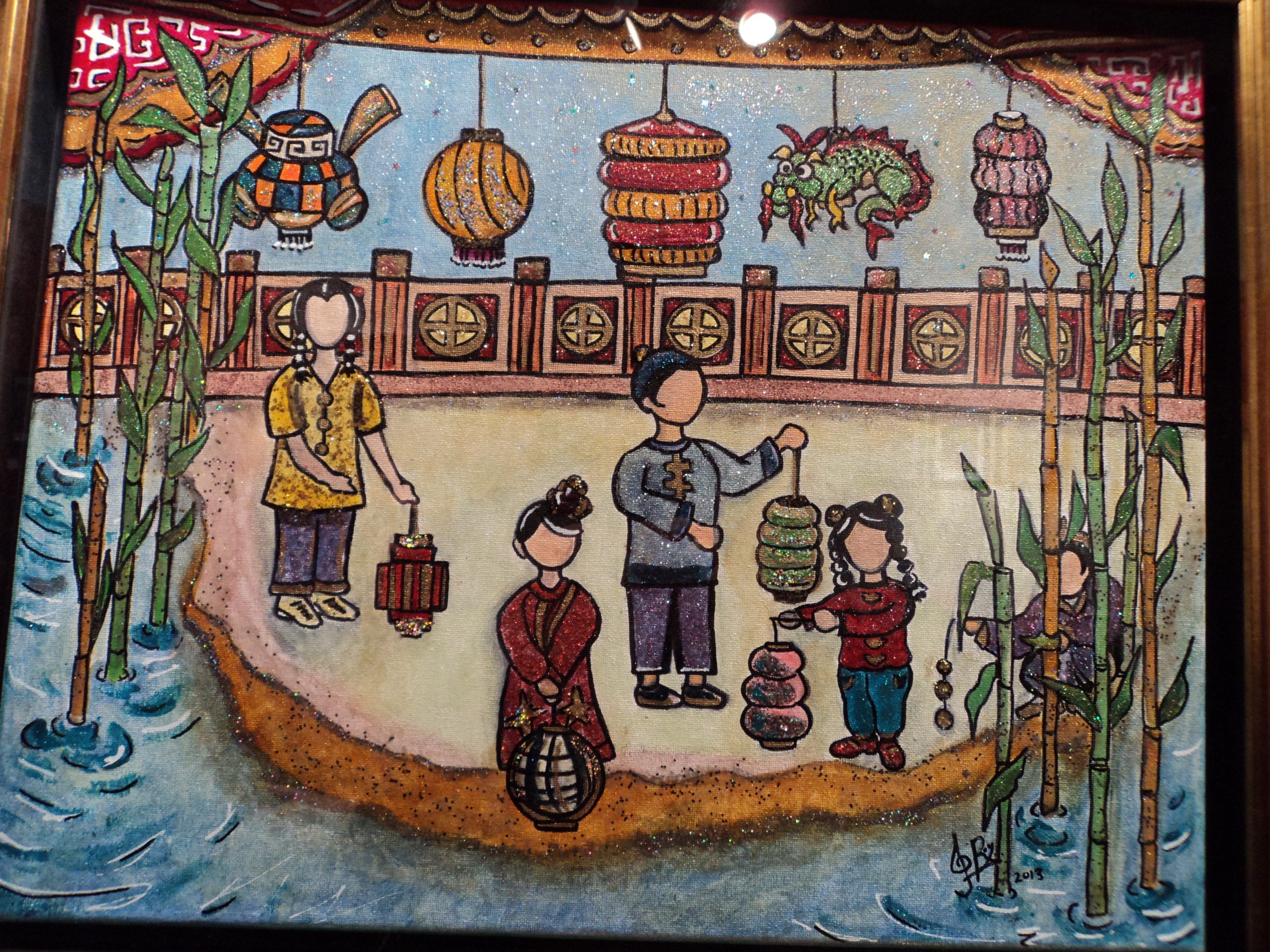
Festival of Lanterns

This beautiful art collection was created by Genevieve P.M.Roy, a local Montreal artist of French and Chinese heritage who I  met when I joined a Dragon Boat team a few years ago.  Roy greeted guests who sipped wine and munched on appetizers as they viewed paintings inspired by her passion for music, acting, and singing. The evening was definitely a family affair. Her mother, Quee Ying Wong, helped organize the evening and her father, Michel Roy officially opened the evening with a speech while her aunt, Jennifer Wong, sold raffle tickets at the door.

The paintings began as gifts to friends. It was while she was working on one such painting when she realized her nail polish was just the color she was looking for. She experimented with products from different companies and created works featuring vibrant color and glitter.

The vernissage was also a fund raiser. A portion of the proceeds from the sale of the paintings and a souvenir book will be donated to the Shriners Hospital for Children which plans to open a new facility in Montreal in the fall of 2015. 

Roy is also a blogger and cultural reporter for Mountain Lake PBS. Visit her web site at http://genevievepmroy.weebly.com/index.html


Creativity, Inspiration and Fun at Montreal Comiccon

When I was a kid, one of my favourite comics was Superman. While other kids fantasized about having x-ray vision and being able to fly, I idolized Lois Lane. I mean, I knew I would never, ever have super powers, but I could, maybe someday, be a writer and have adventures like Lois. After all, she covered Superman’s adventures for the newspaper, so she was right there with him as he fought the bad guys, and even saved his life a few times. Lois Lane was undoubtedly a strong influence when it came to my career choices.

So when the annual Comiccon convention hit Montreal this past weekend, I bought a one day pass and went with my friend and copy editor, Virginia Modugno. A must-see for us was the Q&A with the cast of Battlestar Galactica. The lineup to see Edward James Olmos, James Callis, Tahmoh Penikett and Michael Hogan was really long, but they were worth the wait.

There were so many events for gamers and fans of horror and sci-fi: comedy skits, movie premieres, screenings, a video game room, and the Q&A with celebs. We also saw Felicia Day and Christopher Lloyd as eager fans took turns asking questions.

The exhibition hall had tons of memorabilia, collectibles, costumes and comics. What would Comiccon be without tons of comics? Or without the autograph sessions and photo-ops with the celebrities who created such memorable characters? Besides the ones I mentioned above, Gillian Anderson , George Takei and Lou Ferrigno among others were set up at one end of the hall to meet their fans.

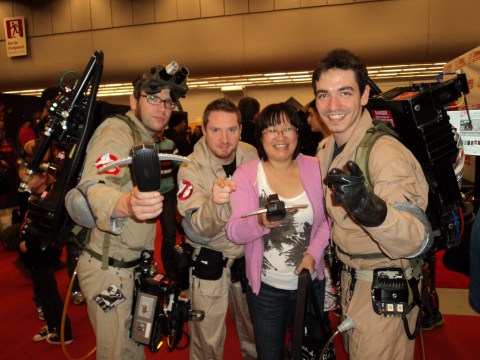
And how did they get there? Well, parked at the other end of the exhibition hall was the Ghostbusters station wagon, Dr. Who’s phone booth, the DeLorean from Back to the Future and the hovercraft that a young Luke Skywalker raced in a prequel. There was literally alot of ground to cover at the Palais des congrès, but undoubtedly, the day belonged to the fans. Just seeing the costumes, the creativity and feeling their enthusiasm was worth the price of admission. I don’t know the names of all these characters, so if anyone recognizes any of them, let me know.

Since it was my first time, it was all a bit overwhelming, and when it ended at 7p.m. I was exhausted. It was loads of fun, and maybe I’ll go back next year. Maybe I’ll even shell out the extra bucks for a photo-op with a celebrity.

I didn’t see anyone there dressed up as Lois Lane, but I suppose it could have been me. I was there with my camera, taking it all in as Lois would have, watching the superheros do their thing.