A Cowherd in Paradise

DSC02842

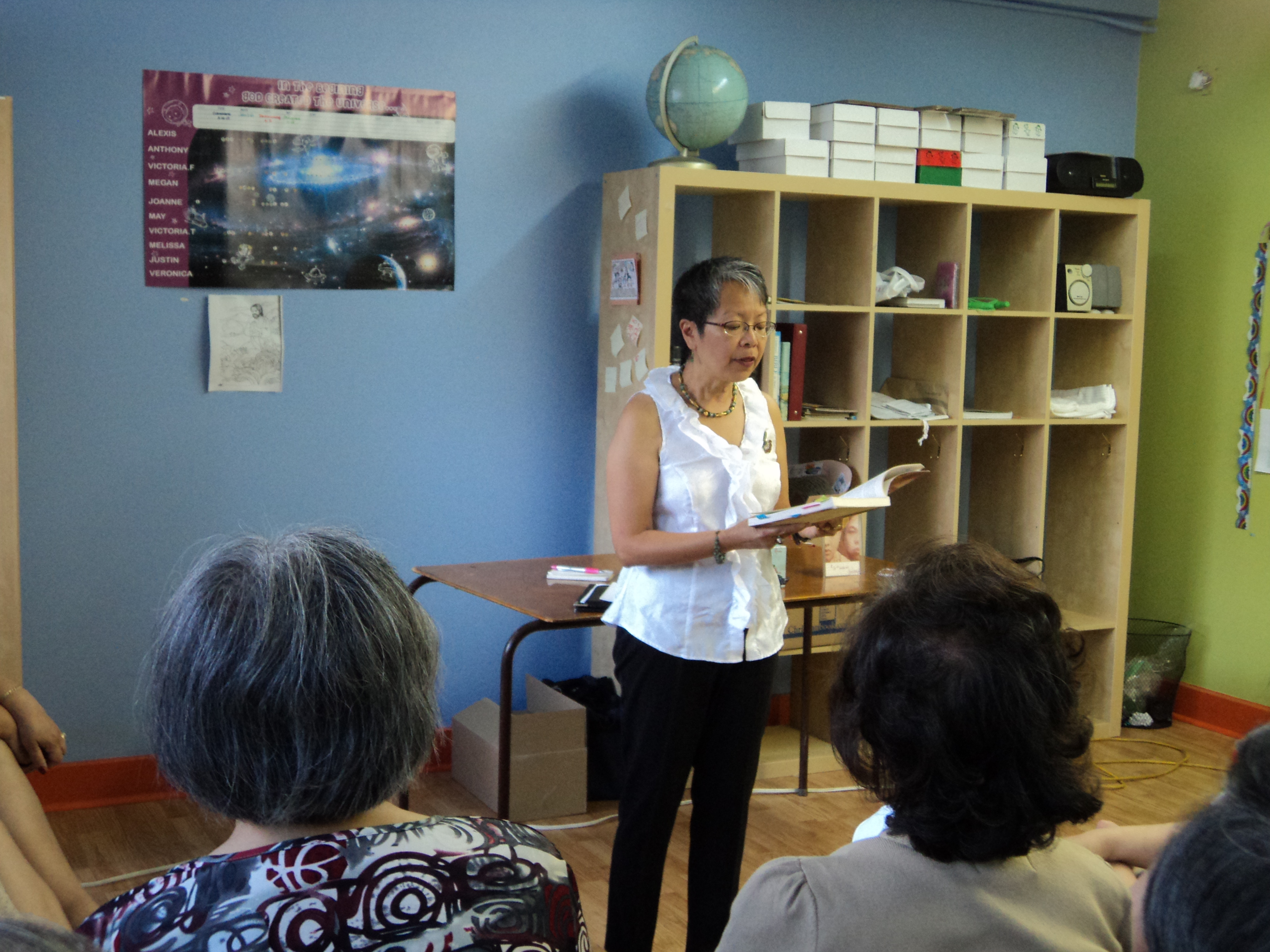
May Wong reads from her book, “A Cowherd in Paradise: From China to Canada”

When a friend e-mailed me that May Wong was coming to Montreal to do a reading this past Sunday, I knew I had to go. Her book, “A Cowherd in Paradise: From China to Canada” is about her parents who were separated for years because of Canada’s Exclusion Act which came into law in 1923. My parents story sounded similar to hers and so I went eager to hear what she had to say.

Wong had the audience’s rapt attention as she set the background for her story, explaining the historical details that shaped her parents’ lives. Her father chose her mother from a picture. Her mother didn’t know what her future husband looked like until after the wedding ceremony.  While her father was establishing himself as a restaurateur in Montreal, her mother was in China stuggling to survive natural disasaters and the Japanese invasion. The title of the book is a tribute to her mother who was responsible for the family’s water buffalo when she was a little girl. The book includes old family photos and a copy of her father’s head tax certificate.

While I haven’t read the book yet, I think it would be interesting for those whose parents, like mine, didn’t talk about the past. It is very fortunate that Wong’s mother, not only wanted to tell her stories, but also wanted Wong to publish them. The book is a treasure not only for Wong’s family, but for families of other head-tax payers as well.

Creativity Blooms at the 2013 Mosaicultures Internationales

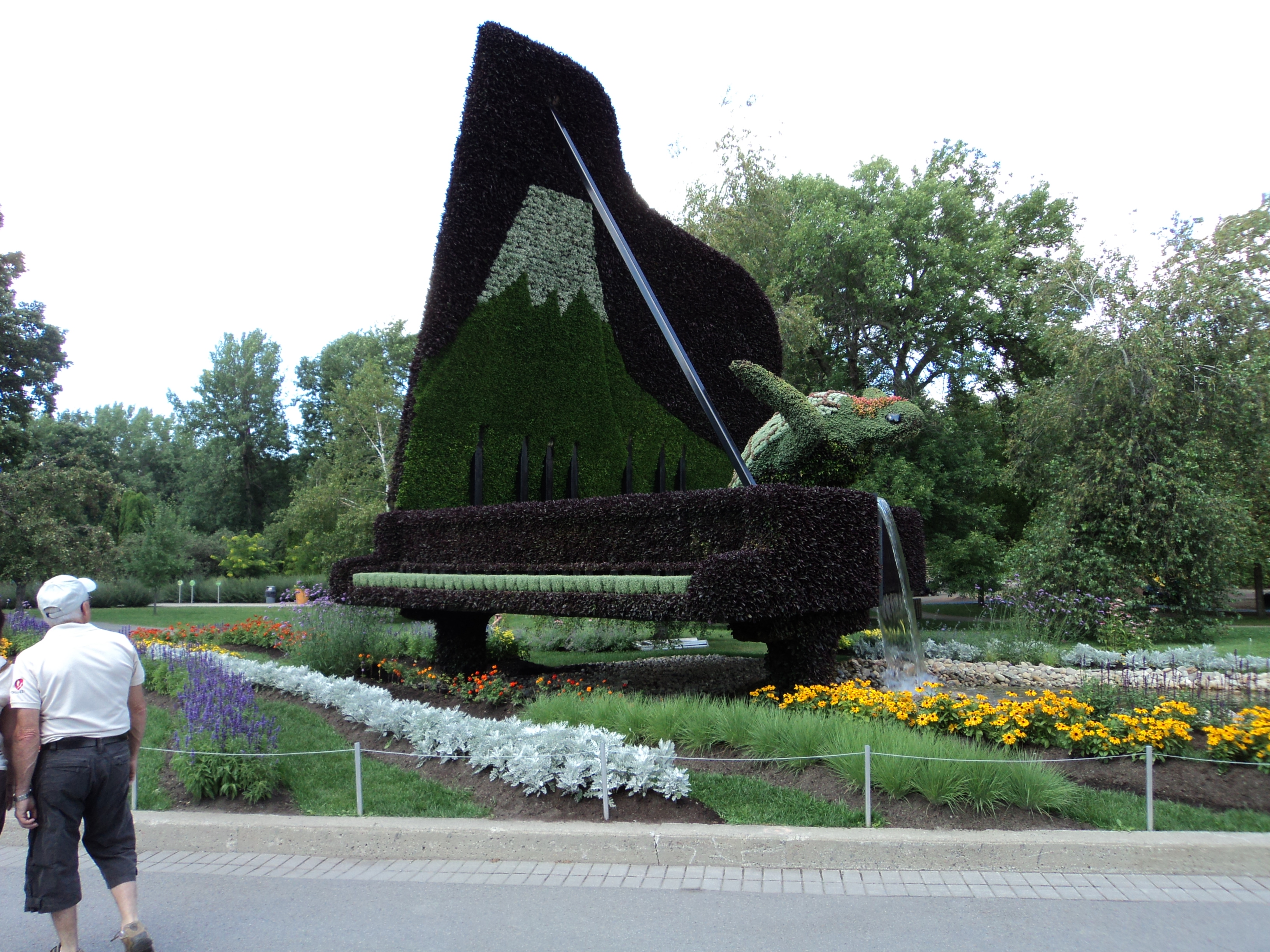
The Montreal Botanical Gardens is the host of the Mosaicultures Internationales this year. The theme is “Land of Hope” and the living larger-than-life sculptures from around the world are spectacular. Enough from me. A picture is worth a thousand words.

DSC02799

Clown Fish (aka Nemo) (Japan)

DSC02808

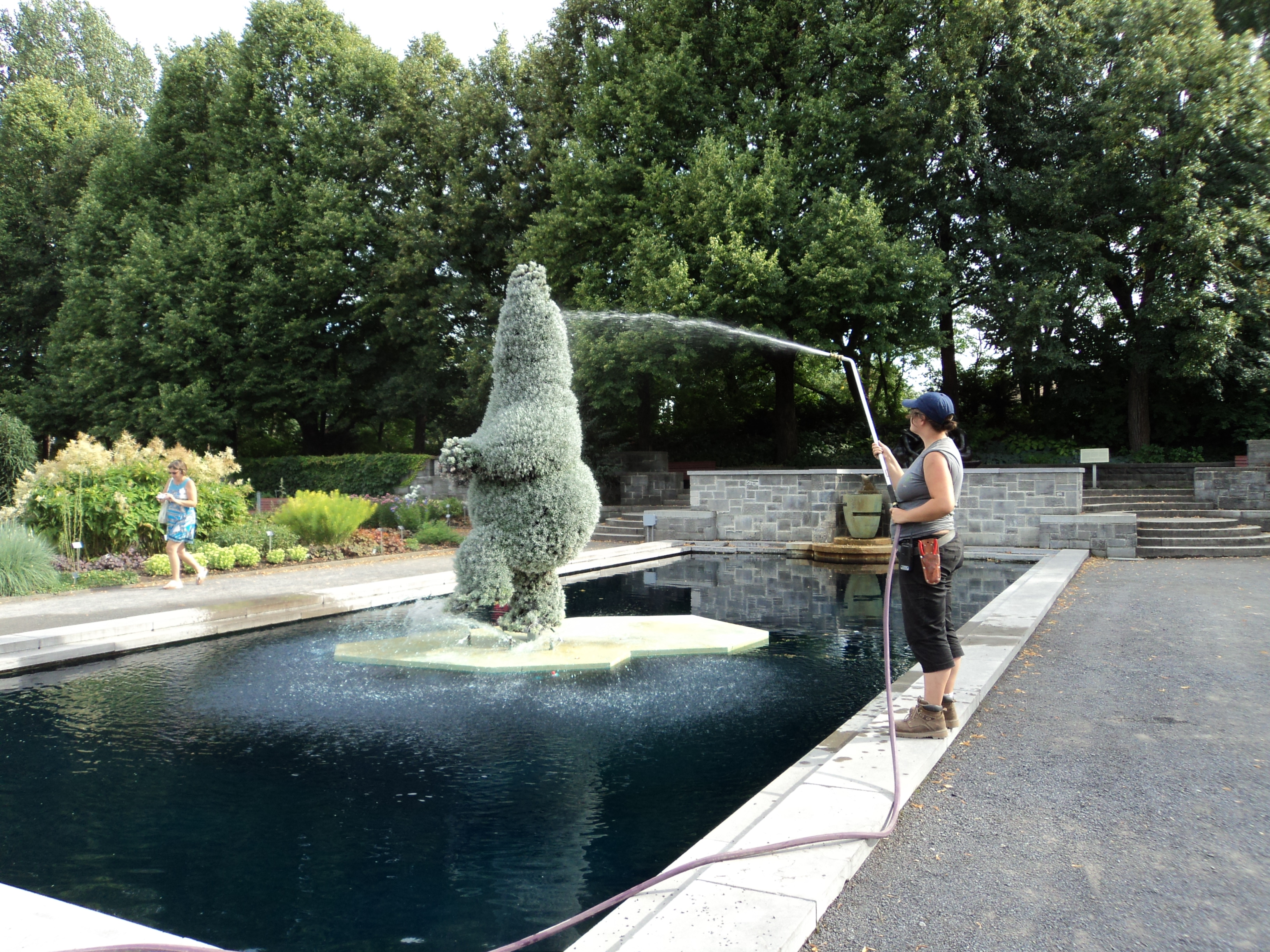
Polar Bear sculpture gets watered.

DSC02807

Memoires of a Childhood Dinner (France)

DSC02802

The Bird Tree (Canada)

DSC02767

Comesse’s Butterfly (France)

DSC02757

All In a Row (Madagascar)

DSC02793

Mother Earth (Canada)

DSC02791

Mother Earth (Canada)

DSC02797

Ambassadors of Hope (Canada)

DSC02798

Phoenix (China)

DSC02780

Spirits of the Wood (Canada)

DSC02782

Spirits of the Wood (Canada)

DSC02778

Guardians of the Island (Chile)

DSC02763

The Man Who Planted Trees (Canada)

DSC02764

The Man Who Planted Trees (Canada)

DSC02773

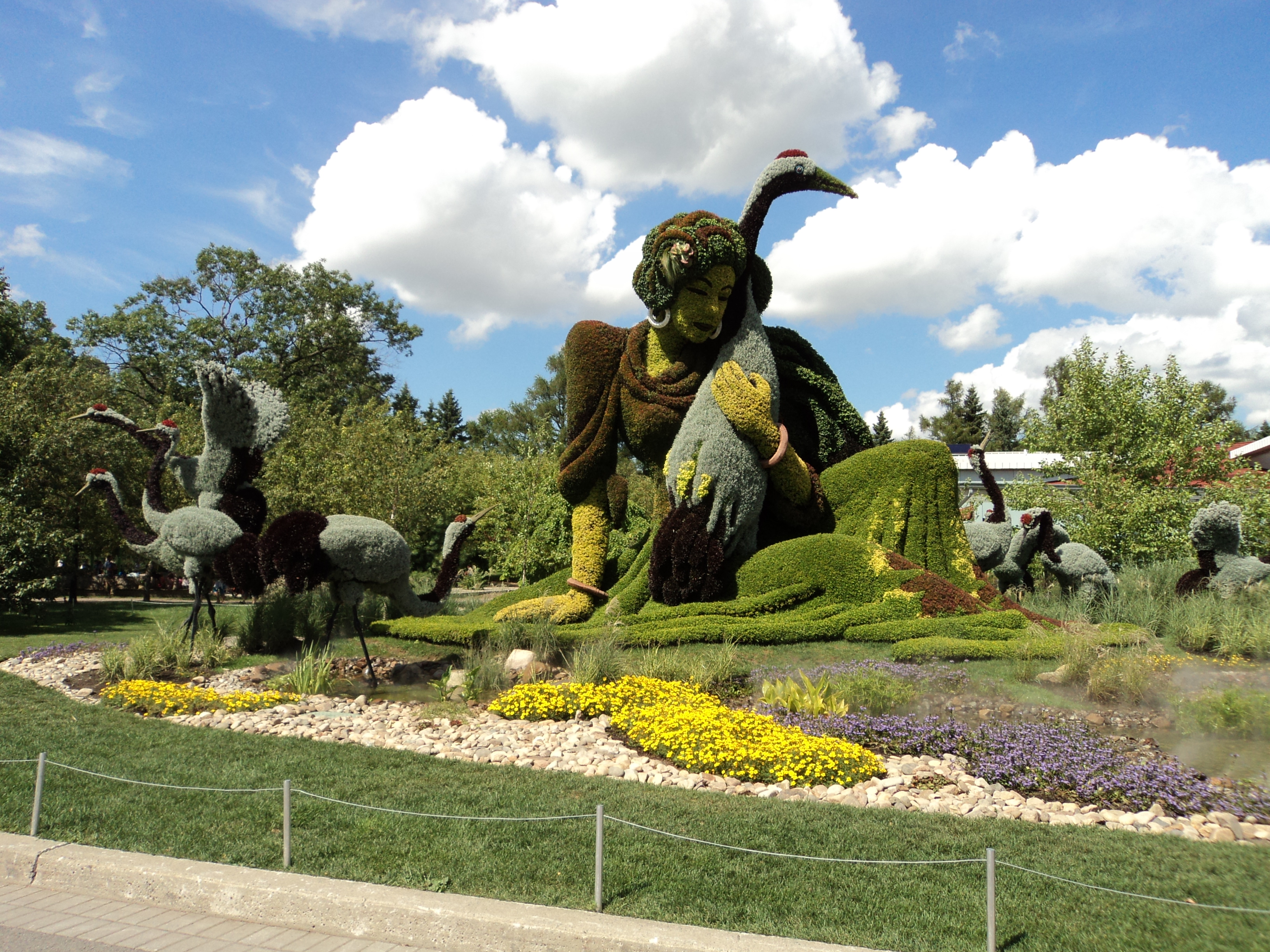
The Crane Girl, a True Story (China)

DSC02800

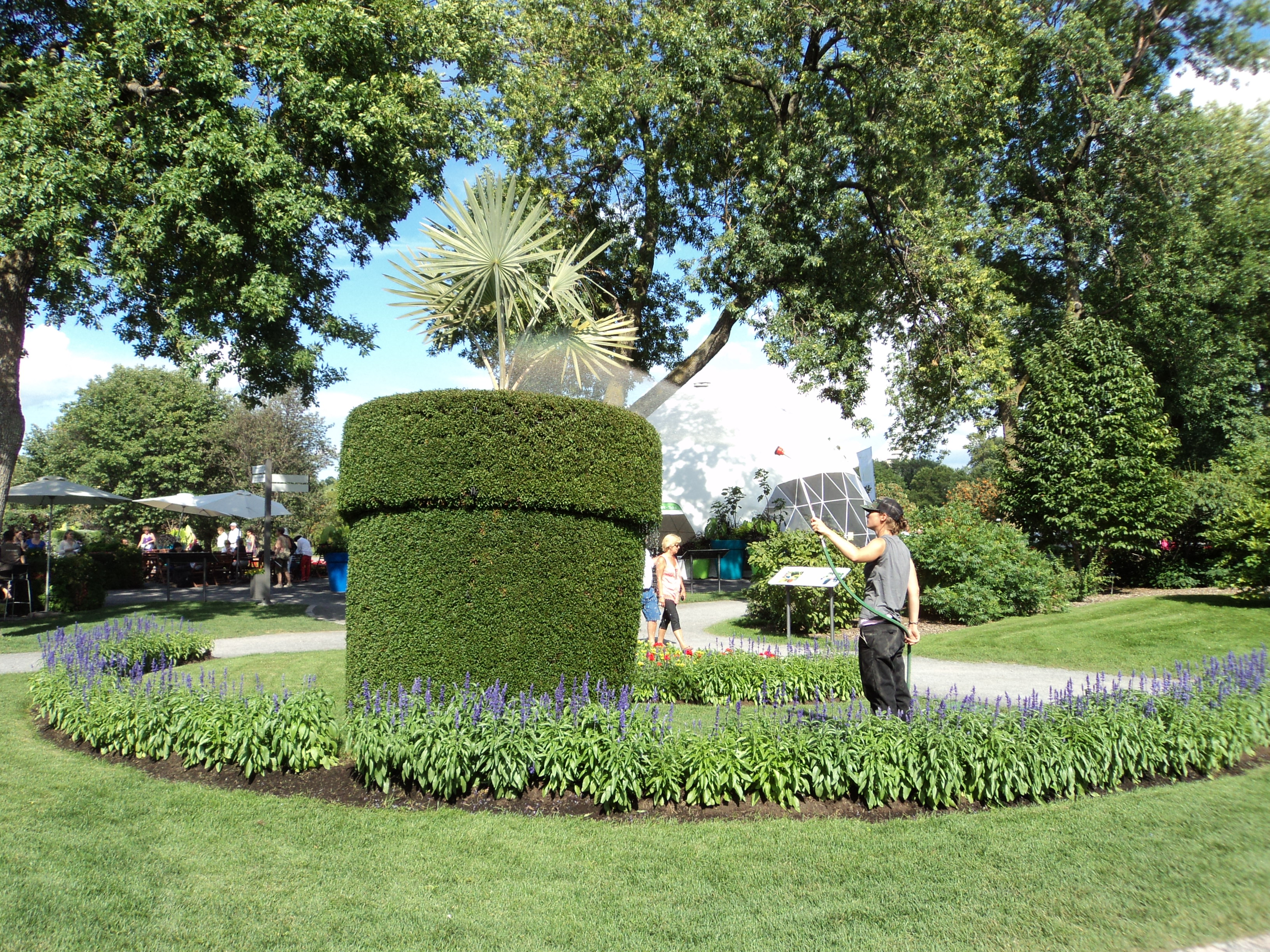
Park employee waters flowers in a pot.

DSC02784

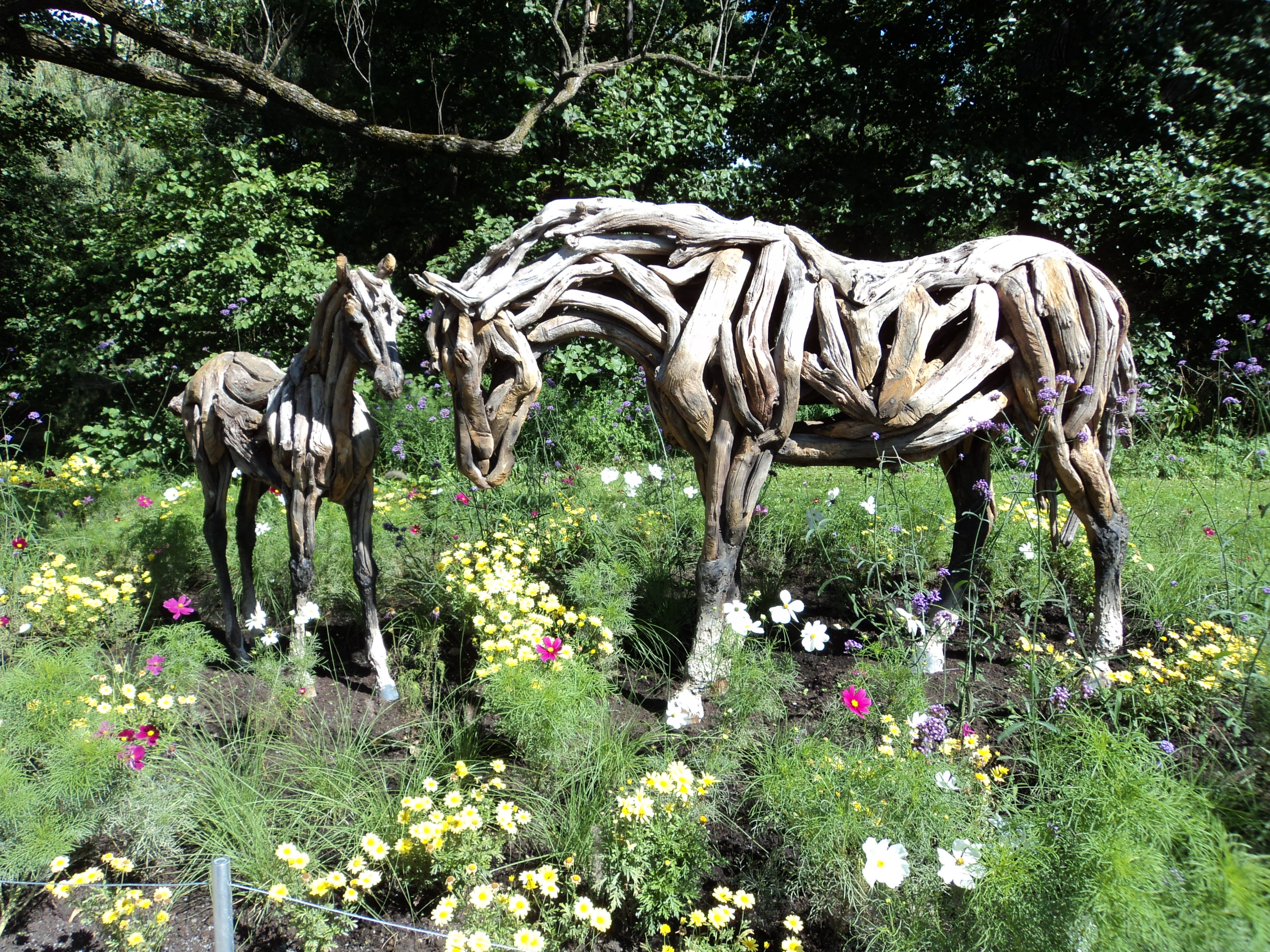
The Uffington White Horse (England)

DSC02770

Fragile Frogs (United States)

DSC02801 DSC02777

Chinese Pastries

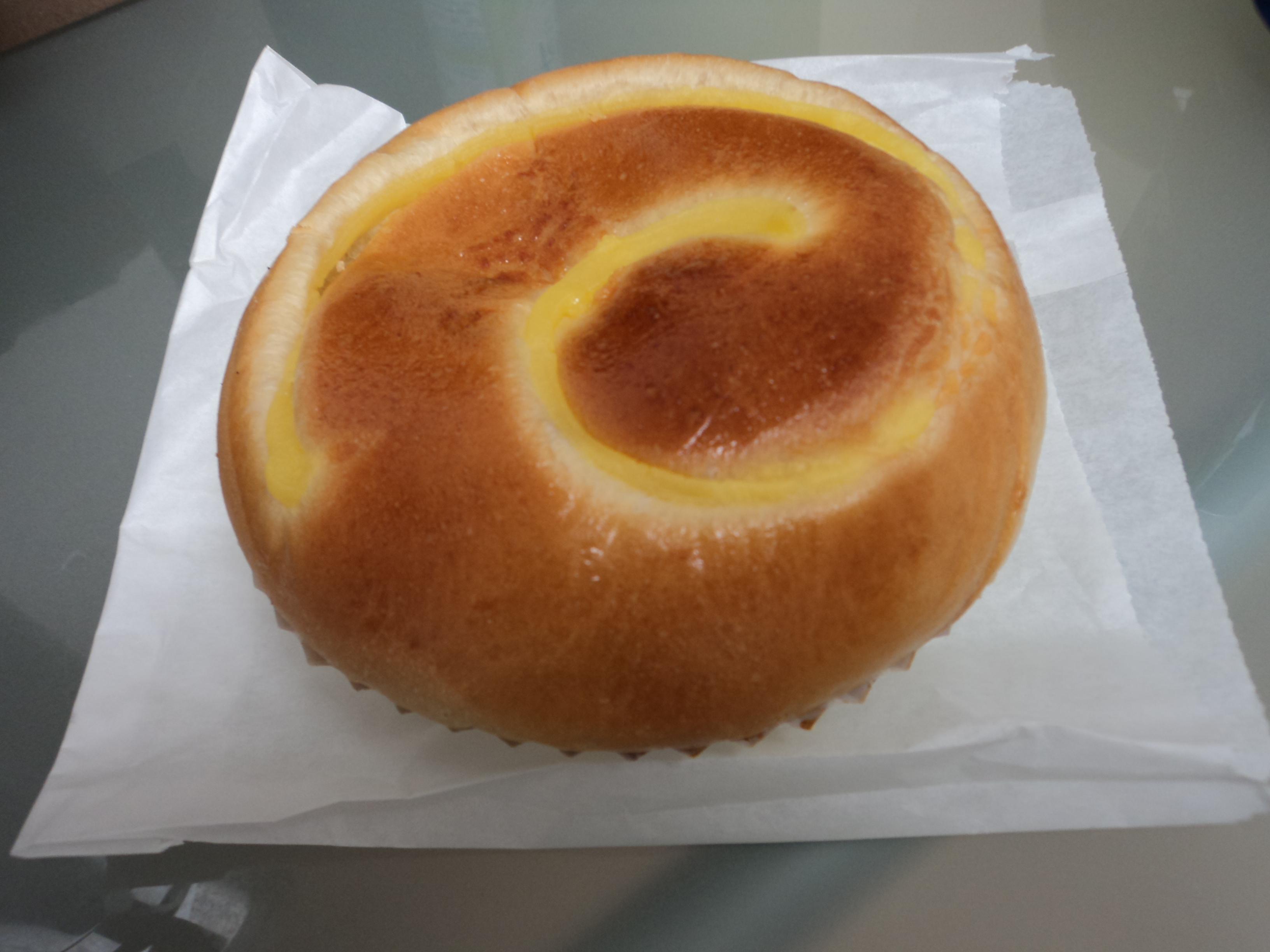
DSC02815Every day on my way to work, I pass by a Hong Kong style pastry shop called Patisserie Cocobun in Atwater metro. It sells a wide variety of freshly baked Chinese buns which include buns filled with either coconut, mango, red bean, custard or if you prefer, no filling at all. I love the bread which is either soft and sweet or lightly crusted. Either way, they’re delicious!  I bought one out of curiosity and now I’m hooked.

The hot buns are filled with either BBQ pork, curry beef, hot dogs or other combinations with ham and are the size of a sandwich. Since  the buns cost less than $2 each, it costs me an average of $4 for lunch.  Cocobun also sells bubble tea and other Hong Kong style cakes and cookies.

DSC02744

Curry beef bun with flaky egg tart for lunch

DSC02741

Red Bean laced bun

DSC02742

Custard bun

The Long Voyage: From Pigtails and Coolies to the New Canadian Mosaic

The Long Voyage: From Pigtails and Coolies to the New Canadian Mosaic

Years ago, when I decided to see if I had the stuff to be a writer, I took a creative writing course at a Continuing Education program at Concordia University. The teacher, to inspire us, told us to write what we know. It sounded simple, and I’ve heard that piece of advice many times since, but I had difficulty because I didn’t think people would be interested in what I knew. I ended up writing a short story based on my experience of working in my family’s restaurant which was eventually published as a children’s picture book, The Fragrant Garden. Since then, I’ve written several stories, both fiction and non-fiction about the Montreal Chinese Community. It’s a way for me to learn about its history as well as my family’s history. My father was  a head tax payer. He was 13 years old when he landed in Vancouver on November 28, 1921 and paid $500 to enter Canada. He never said much about his past, so when I do research, I can only imagine what his story is about.

Now there is an educational website, The Long Voyage: From Pigtails and Coolies to the New Canadian Mosaic, about that period in Canadian history and the history of the Montreal Chinese Community. It has video interviews with descendants of head tax payers and an overview of the history of the Chinese in Canada. Anyone who is interested in Canadian history or the history of head tax payers will find this site useful and informative. It might also spark some interesting conversations in some families.

Lee’s Garden Dry Garlic Spare Ribs

When I was a kid, my parents owned a Chinese-Canadian restaurant called Lee’s Garden. It was located on Park Avenue near Laurier Avenue in Montreal. I started working there on weekends when I was in elementary school, helping my mother make egg rolls or bagging take-out orders. By the time I was in high school, it became a full-time summer job. I answered the phone and handled the cash register. The restaurant was like a second home. The waiters and cooks became extended family and regular customers became old friends.

Then one day my parents told me something that shocked me to the core.  Nothing on the menu was real Chinese food, they said. The butterfly shrimps, chicken chow mein, pineapple chicken, and everything else was invented for the ghosts, the red-haired devils. The news hit me like a lightning bolt. How could that be? Chicken Soo Guy, won ton soup and egg rolls were my comfort food! They were fake?! If the food was fake, then what did I know about being Chinese?

The restaurant’s most popular dish and one of my favourites (and still is) was Dry Garlic Spare Ribs. The tender, melt off the bone ribs with the sweet, sticky sauce was on almost every order. The recipe is one of the few things I have left of the restaurant and I’ve decided to share it with those who made the restaurant a welcoming place, a place where Sunday dinners became a part of their family traditions, where special occasions were celebrated and where the regulars dropped by for a cup of coffee, a piece of pie and friendly banter. You. The public.

Lee’s Garden closed in the early 1970s, but it remains forever in my heart. If you or anyone you know frequented the restaurant, please write a comment. I’d love to hear your story.
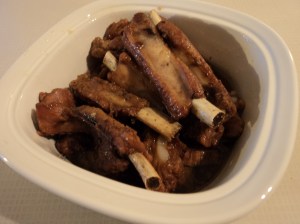
Lee's Garden Dry Garlic Spare Ribs

Lee’s Garden Dry Garlic Spare Ribs

(A Chinese-Canadian classic)

 3 lbs. pork spare ribs

3 cloves of finely chopped garlic

1 1/2 tsp. soy sauce

1 to 2 quarts boiling water

1 tsp. salt

3/4 cup white sugar

  1. Wash and cut the ribs into bite size pieces. Trim excess fat.
  2. Heat a large frying pan or wok on medium high heat. DO NOT ADD ANY oil, butter or margarine as this will produce an oily film on the ribs.
  3. Stir fry ribs until they are an even light brown color. Keep stirring to prevent the meat from sticking to the pan. Drain the juice from the pan.
  4. Add garlic and continue to stir fry for five minutes.
  5. Sprinkle the soy sauce over the ribs and continue stir frying on medium for about 3 to 4 minutes.
  6. Pour boiling water into the pan until the water just covers the ribs.
  7. Sprinkle the salt over the ribs and stir. Cover and boil on medium high for 10 minutes.
  8. Add sugar, distributing it evenly over the ribs. Cover and boil on medium for 20 minutes.
  9. The ribs should be very tender. If not, continue to boil for a few more minutes.
  10. The sauce should be thick and brown. If it is still too watery, leave the cover off, allowing some of the water to evaporate. If the sauce is too thick, add a bit of boiling water.