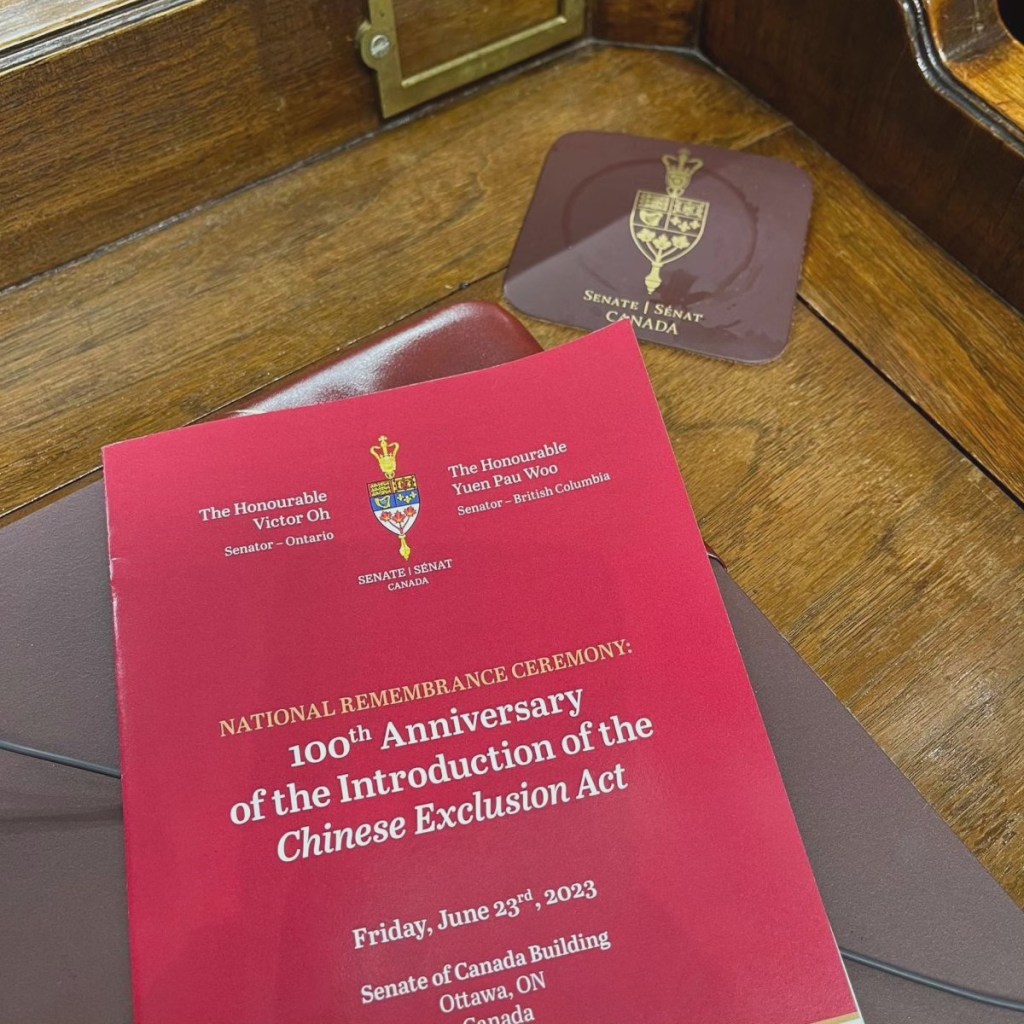
Commemoration of the 100th Anniversary of the Chinese Exclusion Act

It was going to be a historical moment and the place where it was going to happen was significant. The place is a former train station that was a part of the railway network that Chinese labourers built across Canada. Currently the temporary home of the Senate of Canada, it was an appropriate venue to hold the National Remembrance Ceremony for the 100th Anniversary of the Introduction of the Chinese Exclusion Act.

The Act was officially called the Chinese Immigration Act and was passed into law on July 1st, 1923. It prohibited the Chinese from entering Canada, with a few exceptions. The date coincided with Dominion Day, now known as Canada Day. For decades, the Chinese called it Humiliation Day. When I was a kid, I never understood why my father refused to celebrate Canada’s birthday. I was an adult when I finally discovered this was the reason why. That’s why I wanted to see this ceremony; to see how far Canada has come since it enacted that racist law. The ceremony was held in the Senate on June 23, 2023, a week before the actual July 1st date.

My family was directly affected by the Act that was passed by Prime Minister William Lyon Mackenzie King’s government in 1923. The Exclusion Act forced the Chinese to register with the government or risk fines or deportation or imprisonment. My father was 13 years old when he paid $500 to enter Canada in 1921, arriving just two years before the Act was passed. It separated him from his family in China for 24 years until the law was challenged and repealed in 1947. Since I didn’t get an invitation to the ceremony, I did the next best thing. I drove to Ottawa with other members of the JIA Foundation, a non-profit organization dedicated to ensuring Montreal’s Chinatown history and stories are celebrated and not forgotten. There, I joined the Ottawa Chinese community to watch a live stream of the event at the Ottawa Convention Centre.   

I wasn’t sure what to expect as I entered the ballroom in the Convention Centre that was set up to accommodate a few hundred people, but I enjoyed the three hour ceremony. After opening remarks and an Indigenous Blessing, a commemorative plaque was unveiled. It will be installed at the Chinese-Canadian Museum when it opens in Vancouver on June 30th.  
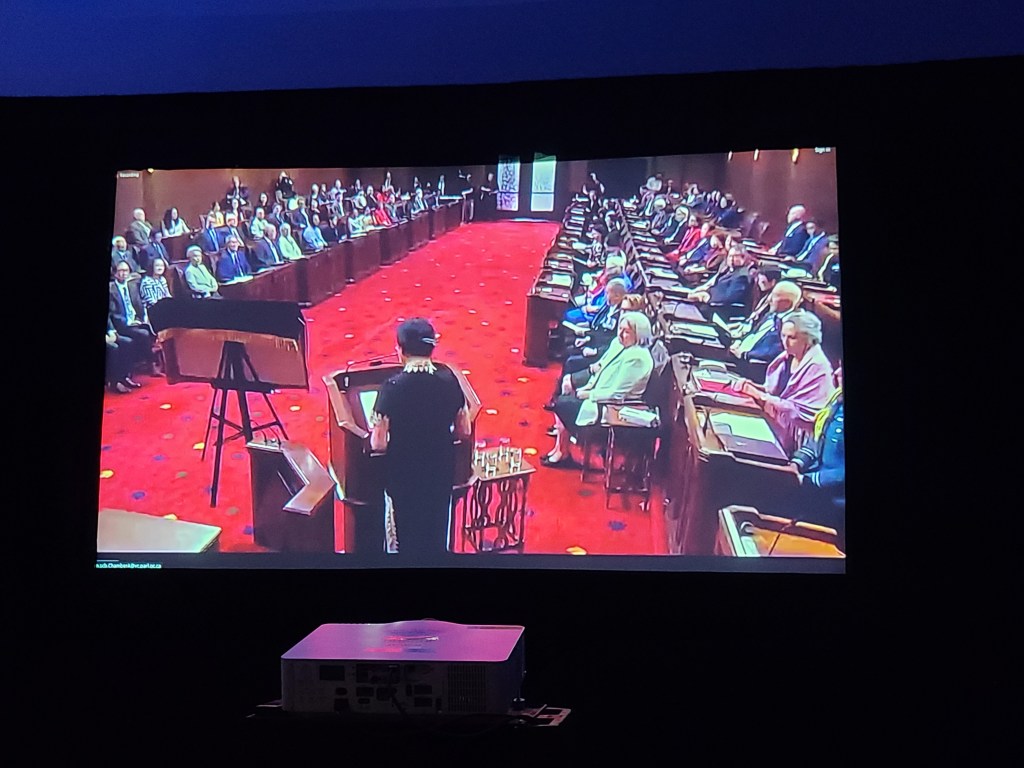
Of course, there were speeches, but they included touching personal stories from Chinese Senators and Ministers about how the Exclusion Act affected their own families.  And there was entertainment. Right on the floor of the Senate where the Act became law, were performances that reminded everyone of the damage and suffering it had caused. The Goh Ballet performed a dance called “Pathways to the Future”. A song that was written by an unknown composer 100 years ago in protest of the Act, entitled “Never forget July 1st” was performed by the National Remembrance Ceremony Choir, conducted by Chin Ki Yeung. The music was composed by Ashley Au. But it was Christopher Tse’s powerful spoken word performance that brought everyone in the senate to their feet.  Later on, when he arrived at the Convention Centre to meet the community, I asked him what it meant for him to be able to recite his poem in the Senate.

“It’s an honour for sure. To have that space in this building, in this instance that represents a government that was responsible directly for putting this legislation in place in the first place,” said Tse. “So it feels strangely symbolic, a bit of a full circle.”

Others I spoke to felt the same way. Anto Chan, host of the live-streaming event at the Ottawa Convention Centre said that seeing the past 100 years acknowledged was powerful. Melissa Tam, whose family was also affected by the Act, felt the ceremony was important as people are still dealing with issues.

So, this Saturday, July 1st, I will celebrate Canada Day as usual. I will also wonder how my father, if he were still alive, would have felt about the Remembrance Ceremony. Thanks to him and all the ancestors who fought for the right to stay in this country, their children, grandchildren and new immigrants enjoy all the benefits of being a Canadian.

However, we still find ourselves fighting anti-Chinese sentiments in spite of all the financial, economical, and artistic contributions the Chinese have made to this country. I think part of the fight is to tell people who we are and what we bring to the table. Sharing our culture, knowledge and friendship is ongoing, but we are more than just a menu at a Chinese-Canadian restaurant. We are a part of the beating heart that drives this country forward.

We are Canadian.
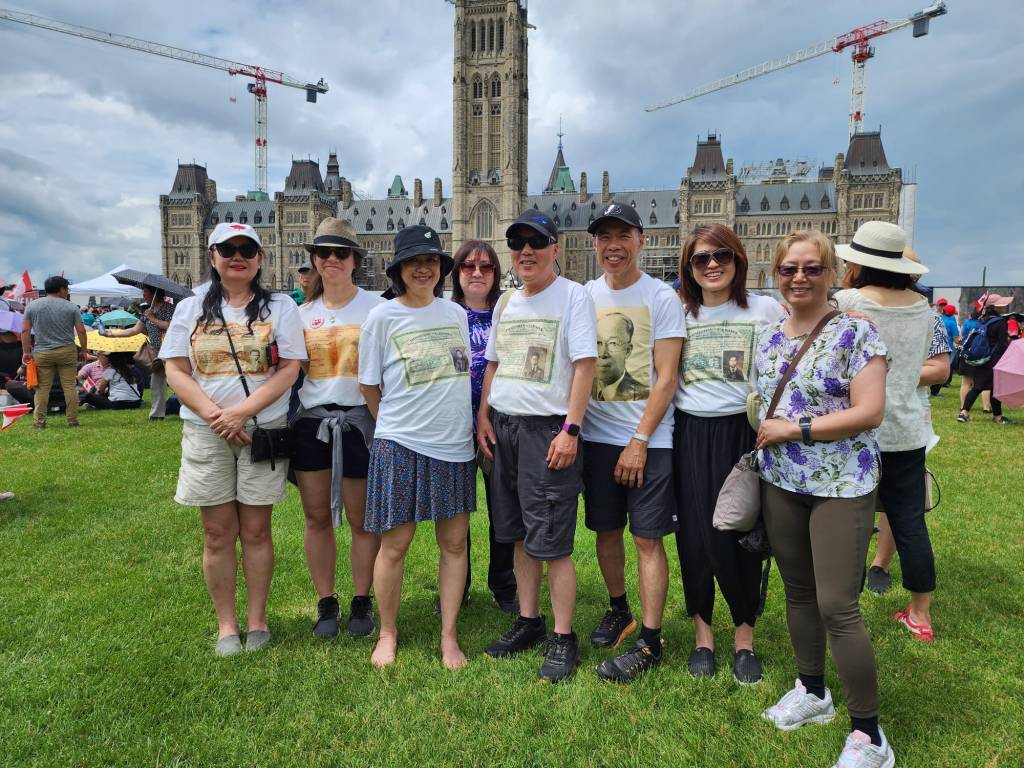
Q & A with artist, Karen Tam

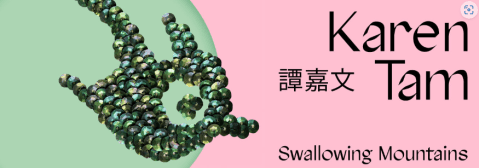
I’m very excited about an upcoming exhibit at the McCord Stewart Museum here in Montreal. Karen Tam, who you may remember from my documentary, is currently the museum’s artist-in-residence. Her solo show, Swallowing Mountains, will open to the public starting Friday, February 17th until August 13, 2023. The exhibit focuses on Montreal’s Chinese Community and I’m honored that a small part of my family’s history will be included in the exhibit.

Here is an introduction and a very short Q&A with Karen about the exhibit.

Swallowing Mountains

The year 2023 marks the 100th anniversary of the Chinese Exclusion Act of 1923, which banned virtually all forms of Chinese immigration to Canada. This legislation, along with the head tax levied only on Chinese immigrants and previous patterns of Chinese migration to Canada, resulted in a disproportionately low number of women in Chinese Canadian communities, creating what were known as ‘bachelor societies.’ During the dark period between 1923 and 1947, when the Act was repealed, and up to 1967, when Canadian immigration policy was liberalized, families were separated for decades.

This exhibition offers a counterpoint to the relative silence in public archives and historical narratives regarding Chinese women in Montreal’s Chinatown. An immersive installation, it honours the many women who have lived, worked, and contributed to the neighbourhood over the past 150 years and who, as a group, have been targeted by anti-Asian attacks during the COVID-19 pandemic. The work takes inspiration from objects and materials in the McCord Stewart Museum’s collection, ranging from historical photographs and family albums, to evening coats, restaurant menus, furniture, and Eaton’s ads.

In the 1970s, six acres of Chinatown were expropriated and razed to construct the Complexe Guy-Favreau and Montréal Convention Centre. This exhibition is a way to carve out and reclaim (albeit temporarily) a Chinese space. The alcoves in the gallery function as smaller installations that recall Chinese storefront displays or stage settings, incorporating my sculptures, shadow-puppets, drawings, and textile works. Swallowing Mountains also looks at the disconnect between the bygone popularity of chinoiserie and Japonisme among white women and the reality experienced by Chinese women in Canada since the late 19th century. By including Cantonese opera recordings, collected treasures and photographs lent by family members, elders and friends in the Chinatown community, the exhibition aims to open up conversations around collections and present a model for a future Montreal Chinese Archive.

1) How did you choose what to include in the exhibit?

At the beginning of my residency, I visited the museum’s reserves and collection (from ceramics to textiles to wallpaper samples to toys to furniture, etc.), and also spent a lot of time in the archives/documentation centre, looking through many photographs, family albums, prints, slides, documents, menus, and books. There were quite a number of objects and photographs that I knew had to be in the show. As I developed the project further and conceived of how I wanted the space to look like and be divided, this helped me in deciding what other objects (like the museum’s vases, tables), would work in the space, formally and conceptually. But it was especially difficult to decide which of the photographs from the family albums to include, as they were so fascinating and were taken from the perspectives of the Chinese individuals and families themselves and showed how they saw and presented themselves.

I knew that I wanted to involve the Chinese community in this exhibition and started contacting elders, family members, friends (such as yourself), residents in Chinatown, and through their invaluable help was able to connect with more people and community organizations in and outside Chinatown. They contributed to the project and lent their photographs and artefacts, which supplement items from my own collection, my artworks, and items from the McCord. As I mentioned above this is my proposal for an eventual building of a community archive that also could have a digitized component.

People were so generous and while I tried to include everything that they offered to lend, due to space constraints a number of photographs didn’t make into the physical exhibit (but I made sure to include at least one item per lender in the vitrines). The lenders graciously allowed the museum to digitize or they provided digitized versions of their images and these are viewable on an iPad/tablet next to the community photo vitrines. For many of the lenders, they felt that they never really saw the Chinese Canadian community, themselves, their families, histories and stories reflected in institutions such as the McCord Stewart Museum, and they wanted to support a project that highlights their experiences, especially an exhibition that focuses on Montreal Chinatown and Chinese women.

2) This exhibit, like your other installations, centers on the Chinese-Canadian experience. What does this one mean to you?

Much of my artwork comes out of my research in archives and museum collections. Certain pieces are inspired by specific historical or archival connections, and sometimes it is the materiality and imagery in the collections. At the McCord Stewart, I recognized that there was a gap or underrepresentation of the Montreal Chinese community in the museum’s collections and archives. Not to say there wasn’t any materials, but it made me think about how I could amplify and highlight stories, histories, contributions that did involve this community, especially the women. This exhibit is quite meaningful for me because it is in my hometown and provides an opportunity to do so. Through the exhibition, I hope that visitors will start thinking about the hidden stories and artifacts in their own family and community.

***

As part of the exhibit, on April 5th at 6pm, there will be a screening of Big Fight in Little Chinatown by local filmmaker, Karen Cho. It is a must-see film about how Chinatowns across Canada and in the U.S. are fighting for their survival. There will be a conversation in English between Karen Tam and Karen Cho after the screening. It is free but you must register on the museum’s website. Click on this link and scroll to the bottom of the page.

Straight Talk about Race

So now you get to see what my Cover Girl experience was all about. The CBC officially launched Real Talk on Race today. For the next two weeks, CBC Montreal’s radio, television and social media platforms will be discussing and encouraging people to talk about race and racial identity. Ten Montrealers,  including me, contributed personal stories which you can read on their web site. My story will roll out on Wednesday, but you can have a sneak peek here.

Listen to CBC radio’s Daybreak and Radio Noon. You can join the conversation by texting or calling into the show. You can also like them on Facebook at https://www.facebook.com/CBCMontreal/ or follow them on Twitter and Instagram: @CBCMontreal.


How to Tell if You Were Raised in a Chinese-American (or Canadian) Family

Photo from iStock

Photo from iStock

Read this hilarious post by LiAnne Yu and see how many of these signs you can identify with. I can identify with every one except #7 and 10.

17 signs you were raised in a Chinese-American family

1. You speak Chinglish fluently.

You and your parents have developed your own, unique language, made up of some parts English and some parts Chinese. Every Chinese-American family has their own version of Chinglish. Some of my family favorites: “I bought hen duo (a lot) of your favorite snacks.” “It’s too mafan (troublesome).” And: “That’s so diu lian (humiliating).” When you were younger you felt embarrassed to speak Chinglish in public, but now that you’re older, you cherish having such an intimate language that you share with only a few other people in the world.  Continue reading

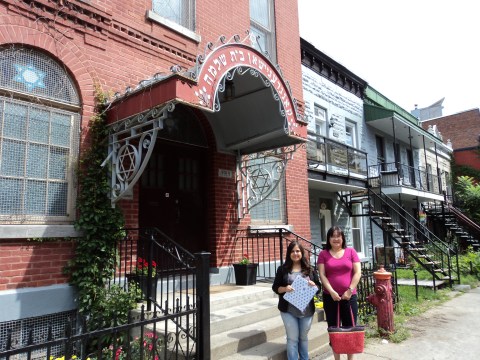
Bagg Street Shul

Walking Tours with the Museum of Jewish Montreal

Doing research for a project can either be a chore or a pleasure. It was the latter for me recently. I’ve been researching Jewish history in Montreal when a friend mentioned that the Museum of Jewish Montreal gives walking tours. It sounded like a lot more fun than just reading about it, so I signed up for “Making Their Mark,” a tour of the Jewish community that existed in the Plateau area from the turn of the 20th century until the 1950s.

I met Laura, my tour guide, at the corner of St. Laurent and Milton. Since I was the only one who signed up for that day, it would be a private tour. We spent the next two hours viewing buildings that were formerly synagogues, schools and hospitals which Laura brought to life as she talked about the immigration of Eastern European Jews and how they established their community, culture and what was once Montreal’s thriving schmatta industry.

Continue reading

Canada Day Cake 2014

Canada’s 147th Birthday

My friends, Celia and Pauline, had volunteered to barbecue hamburgers at a Canada Day celebration in Montreal West. Being the good and loyal friend that I am, I decided to support their efforts by eating one. It was a hot, muggy day perfect for relaxing in the park listening to live music and taking advantage of the ice cream carts. Here are a few photos of the festivities. Happy Canada Day, everyone!

The Fitting Room by Cheryl Sim

Chinese Fever

Looking for some free things to do around Montreal? Head towards Chinatown and take a look at a couple of exhibits by local artists.

Cheryl Sim

Cheryl Sim

La Cabine d’Essayage (The Fitting Room) by Cheryl Sim is aptly located in a small corner of a shopping mall in Chinatown amid clothing and accessory boutiques.

Sim examines the cheongsam, which according to her, is a dress that has become an internationally recognized symbol of Chinese cultural identity. She asks Canadian-born Chinese women how they feel about the dress and if they have a desire to wear it. You get to listen to their answers through headphones and feel as if you’re a part of their conversation. Also part of the exhibit is a video-sculptural work that evokes the classic Chinese screen on which photos and videos showing the evolution of the cheongsam are displayed, and a transparent, plexi-glass fitting room which projects clips from Hollywood films onto the visitor’s body.

Continue reading

Celebrate Asian Heritage Month

Asian Heritage Month 2014


If you have always wanted to try dim sum but never got around to it, then here’s a good reason to go: May is designated as Asian Heritage Month. The Canadian Government’s web site (where you can download the poster above) says “Asian Heritage Month is an ideal occasion for all to celebrate the beauty and wisdom of various Asian cultures.”  Of course, you can celebrate anytime of the year, but what better excuse to order Chinese take-out and indulge in a marathon of Bruce Lee or Ang Lee films?

Need some more ideas? Here are a few from my shelf of Canadian books and film:

Books

I’m currently reading A Cowherd in Paradise – From China to Canada by May Q. Wong and am loving it. It’s the story of Wong’s parents who were forced to live apart for 25 years because of Canada’s exclusionary immigration laws. It is a well-written account with family photos and it brings to life the price the Chinese paid when Canada enacted the Chinese Immigration Act. I met Wong when she came to Montreal to do a reading of her book. You can read about it here. 

The Measure of a Man: The Story of a Father, a Son and a Suit by J.J. Lee was a finalist for the Governor General’s literary award for non-fiction in 2012. This book deserved all the accolades it received. This memoir about a son who decides to become an apprentice to one of the last great tailors in Vancouver’s Chinatown in order to alter his father’s suit learns invaluable lessons about life instead.

The Jade Peony by Wayson Choy is, in my opinion, a classic. It’s the story of the children of an immigrant family living and growing up in Vancouver’s Chinatown in the 1930s and 1940s. Continue reading